

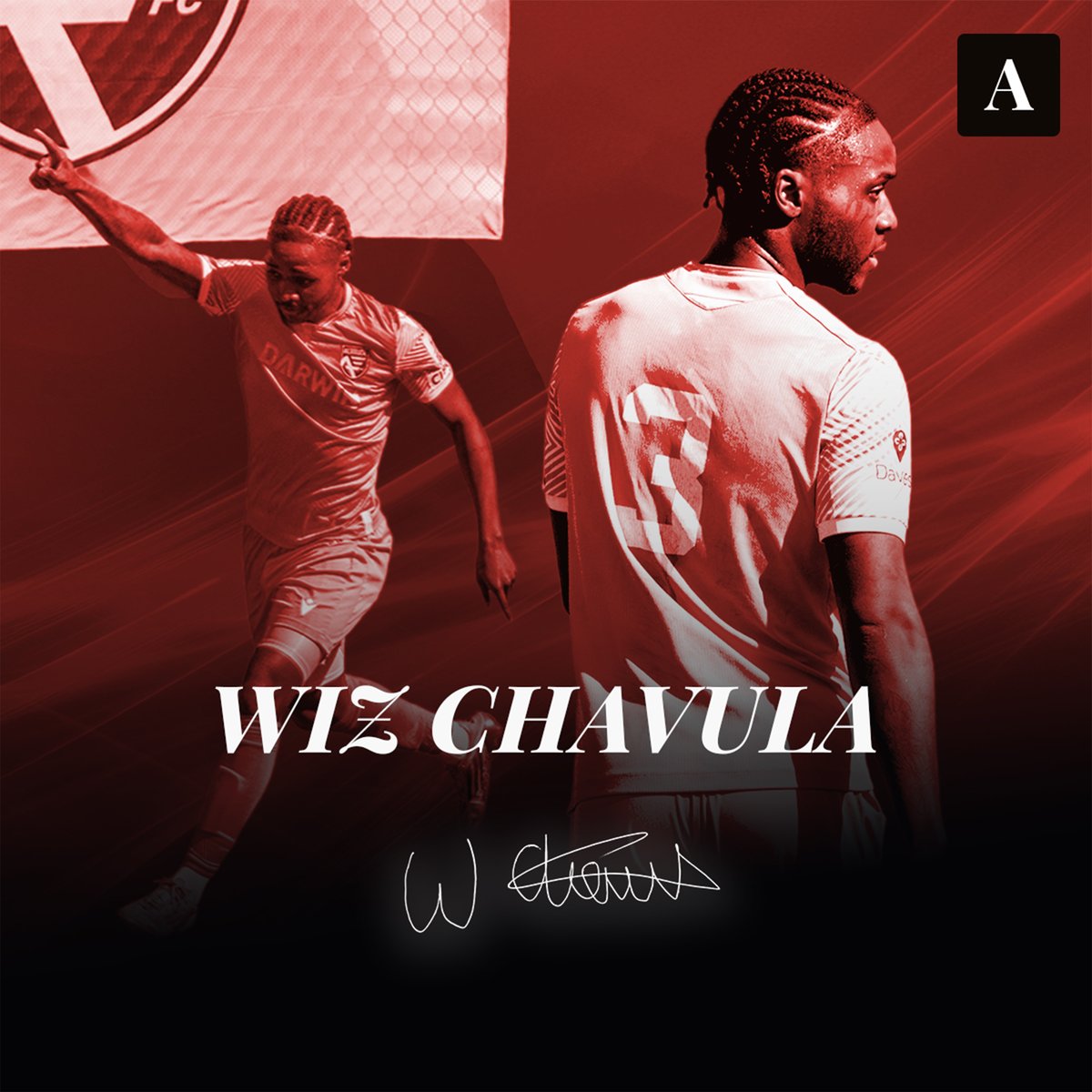
The first goal Wizaso "Wiz" Chavula ever scored, he didn't know whose team he was on.
He was six years old, in Malawi, where he was born and raised. His older brother, maybe ten at the time, would walk him down the street to where the neighbourhood kids gathered. The road was sandy and bumpy. Two bricks marked the goal. The ball was something they made themselves, out of rubber bands and plastic bags, and they'd play five-a-side right there in the middle of the road while cars and people moved around them.
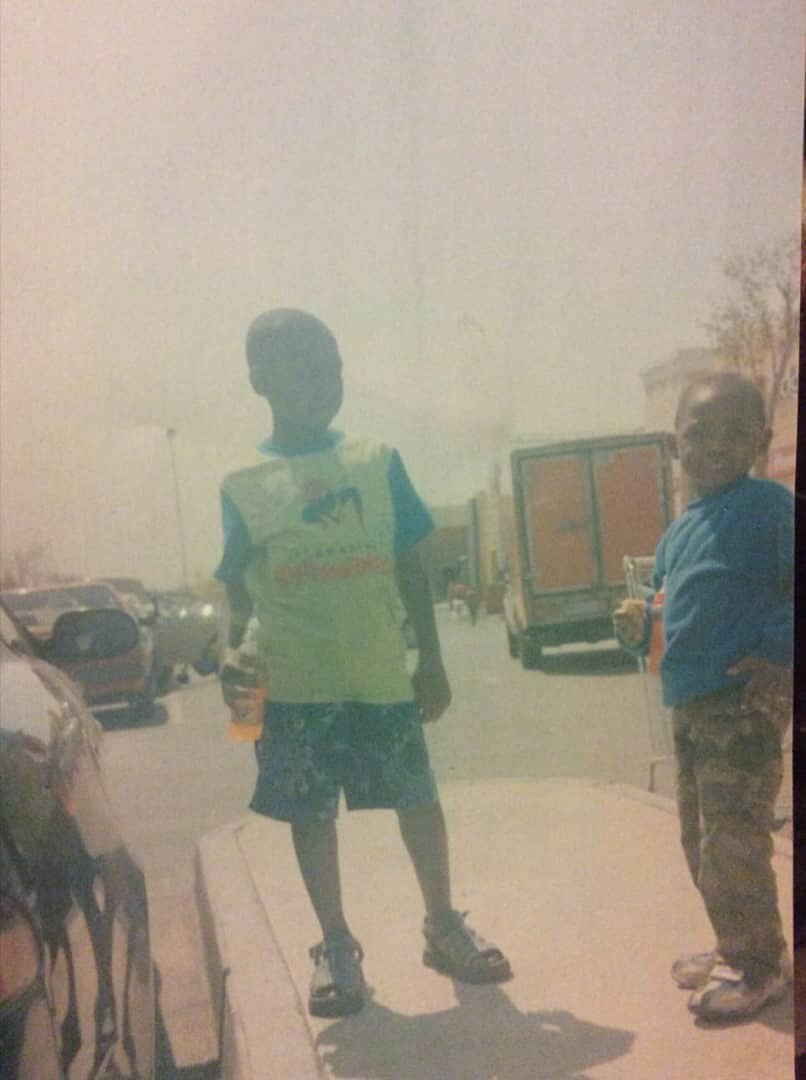
Wiz got the ball. He didn't understand the teams, didn't know which way he was shooting. He just understood that the thing had to go between those two bricks. So he swung his foot at the plastic-bag ball, and it went in, and everyone started cheering.
"That was the first time I kind of felt like I belonged somewhere. "Even though it wasn't a grass field, in perfect conditions, it just felt right. Natural."
— Wiz Chavula
That feeling is the whole story, really. Everything that came after — four countries, a half-dozen schools, a stretch where he barely touched a ball at all — was just Wiz trying to get back to it. Back home, soccer wasn't organized. It wasn't about money. Nobody signed up for anything. It was simply what you did, the best feeling available, woven into the day. He carried that idea of the game with him everywhere, and it turns out that's not a small thing to carry.
A Childhood in Motion
Wiz's father works for the African Development Bank, doing accounting tied to West Africa, and the job moved the family the way those jobs do — city to city, country to country. For two kids, that meant growing up in transit.
Malawi came first. Then Tunisia, from roughly 2010 to 2015, which was the longest the family stayed put anywhere. For a while, that was home. In early 2015, around the age of twelve, Wiz was sent to boarding school in the UK, where his older brother was finishing his secondary schooling before earning a spot at UBC. When their dad was scheduled to move again, this time toward Ivory Coast, the family made a decision that would change everything: the boys needed their education somewhere stable, somewhere they didn't have to worry about leaving the next year. So in 2018, Wiz landed in North Vancouver. It was the first city he lived in here, and the one where the rest of this story takes place.
Within the family, there were two views of what Wiz's future should look like. His father was locked in on education above all — the stable, sensible path. His mother was the one who had his back on the football dream, who believed it was worth chasing. She wasn't in Vancouver yet; that would come later. But her belief in the thing he loved never wavered.
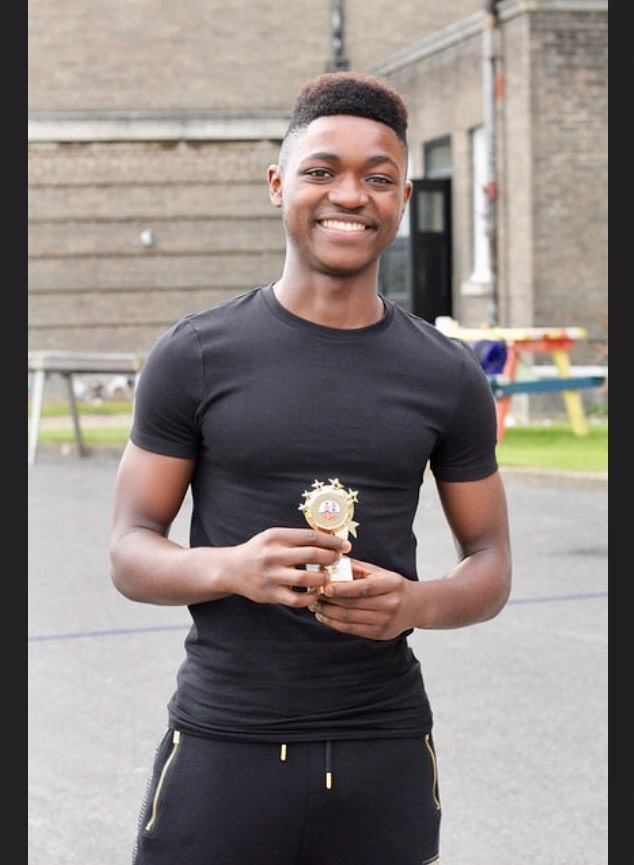
It's a lot for anyone, let alone a kid — the boarding schools, the distance from family, the perpetual experience of being the new person who has to figure out a new place from scratch. But there was one constant.
"Soccer's been with me pretty much my whole life"
— Wiz Chavula
The game was the thread that ran through every move, even when, for a few years, it nearly went silent.
Levels to This
His first taste of organized soccer came in Tunisia, when he was around ten. A PE teacher clocked the thing every coach since has clocked first — that Wiz was fast — and invited him to come try out at a place called Star Sport Academy.
The facilities weren't much, but they had turf, and that alone was new. So were the cones. So were the drills. Wiz remembers warming up next to a group of Tunisian kids his age who could dribble through those cones doing flicks and tricks he'd never seen in his life. Then it was his turn, and he knocked a couple of them over.
"My body was not used to it. That's when I realized, yeah, there's levels to this. If I wanted to go further, I'd have to step up."
— Wiz Chavula
There was a harder part to that chapter, too, and Wiz is honest about it without dwelling on it. He was the only kid there who wasn't Tunisian, and he was excluded — looked down on, left out of things he only understood the shape of years later. At the time he was too young to register it as racism. He just noticed, eventually, that he wasn't being invited to certain things and wondered why.
He's careful about how he tells it, because he refuses to let one experience stand in for a whole people. He made friendships in Tunisia that have lasted to this day. Altitude's assistant coach, Kais, is Tunisian, and the two of them have talked about exactly this. Wiz doesn't carry it as a grievance. He carries it as one of the things that happened, one of the things he came through — and if you spend any time with him, what's remarkable is how little it seems to have closed him off. He stayed open. That's a choice he keeps making.
The Quiet Years
Here's the part nobody would guess. Wiz spent years in England — the country where football is close to a religion — and barely played.
The boarding school was strict and packed with activities, and there was never a real game to be found, just the occasional kickabout on a patch of grass. So Wiz poured his speed into whatever he could: rugby, field hockey, a bit of track. Anything fast. Soccer drifted into the background, something he'd loved as a kid but couldn't see a future in. There was no visible pathway, so it became a thing he used to do.
England left another mark, too. He felt he had to talk a certain way, behave a certain way, walk on eggshells to fit the mold. He brought that stiffness with him to Canada at first, before he learned he didn't need it.
"Later I realized you could just be yourself," he says. "I think it was part of maturing, figuring out who I wanted to be." Canada, he found, was good at letting people be what they are. He relaxed into it. He started to sound like himself again.
North Van and the Malawian Sauce
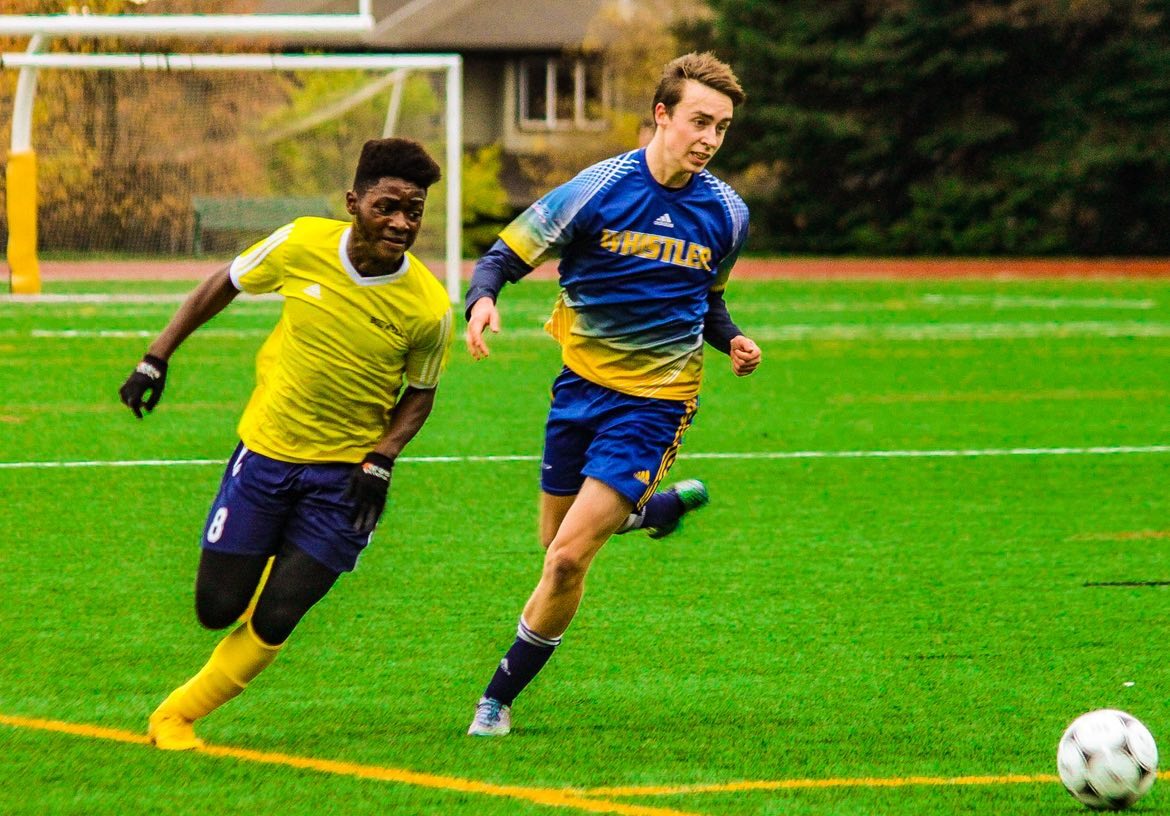
When Wiz arrived at Bodwell High School in North Vancouver, he did what he'd always done in a new place: he went back to what he knew. He found the soccer tryouts.
The coach, Doug Graham, taught math and ran the team in the fall, and it didn't take him long to see it. Wiz was dribbling past players, getting off a strong shot, and doing it all left-footed and fast — he was among the top twenty quickest kids his age in North Van. He made the team easily. What's harder to believe is what came next: he became captain. He was named the school's Athlete of the Year. He earned a spot on the North Shore Secondary Schools first all-star team.
This from someone who had barely played in years and called himself raw, whose control wasn't yet sharp. What he brought instead was something he can only describe one way.
"I play with that kind of sauce," he says. "That Malawian sauce that I grew up with, and took with me all those years."
Ask him what football actually is, and he won't tell you about systems. He'll tell you it's about expressing yourself on the field, in the moment, on instinct. There are no cone drills out there, he points out — the cone is a player, and the player moves. The kids who grew up playing in the street for the love of it develop a fluidity you can't teach, because for them the game was never an activity they were signed up to do. It was culture.
You could see all of it in his first game for Bodwell, against Carson Graham. Wiz got the ball near the halfway line and simply went, knocking it past defender after defender and outrunning everyone to it. He compares it, a little sheepishly, to Gareth Bale's famous Champions League goal — the one where Bale runs around a defender and nearly off the pitch to reach the ball. Something like that.
And through all of it, he stayed grounded, because he always knew where the ball had first gone between two bricks. "Coming from playing on those dirt roads," he says, "I always remember where the journey started."
Don't Cry
The game that changed his life is one he lost.
It was a Bodwell playoff against Collingwood, with a place in the next round on the line. To Wiz, the stakes felt total. High school soccer ran once a year, and if it ended here, he didn't know when he'd play a real match again — he'd just go back, in his words, to being a normal Wiz.
He scanned the Collingwood side and they looked like men. Then he looked at their bench and saw something he'd never really seen in soccer here: a Black coach. He didn't know the man's name yet. He filed it away and locked back into the game.
Bodwell went down 2–1, and the match spilled into extra time. Then came a goal kick. A tall midfielder won the first ball and it dropped to Wiz. He took off, half-panicking, the ball ricocheting off a defender and back into his path until suddenly he was clear, one-on-one with the keeper at the edge of the box. And then he did something he had never once done in his life.
He chipped him.
"I don't know what got into me, I've never chipped a keeper ever. The first time I even tried that technique. Just instincts. Maybe I did it as a kid, right?"
— Wiz Chavula
He poked it up with backspin, watched the keeper go down, watched the ball bounce and bounce and dribble over the line — and then he ripped his shirt off and screamed, knowing full well the yellow card was coming and not caring even a little.
Bodwell lost on penalties anyway. Wiz eyes watering, not over the result, but because he was sure this was the end of it. And as the teams shook hands, that coach from the other bench walked straight up to him.
"Don't cry," the man said. "You're gonna come play with me."
His name was Faly, Senegalese, the man behind an academy called FC Faly, coaching Collingwood on the side. He'd watched the whole thing, and he recruited Wiz off that single game. He still teases him about it, years later: when I met you, you were crying like a little girl.
The Faly Years
What Faly did for Wiz went well beyond coaching. Wiz was at a boarding school with strict rules and no idea how to get around the city — he didn't even know how to take a bus. So Faly arranged the whole thing, lining up rides from other players' parents to get him to training and back, once or twice a week, with games on the weekend.
Faly also told him the truth. When it came to Wiz's technique, he didn't sugarcoat it: it wasn't there yet. And then he made him better, pushing him and putting him in games against real competition. It's a big reason Wiz's touch eventually caught up to his instinct.
The academy gave him a brotherhood, too. There was Deco — Declan — whom Wiz greeted so formally on day one ("hello sir, thank you so much for taking me in") that Deco wondered who on earth this kid was. They're tight now, and they laugh about it. There was Athos, who Wiz eventually realized had been on that very Carson Graham team from his first high school game; the two ended up sharing a basement suite for about a year and remain brothers to this day, even with Athos now back in Portugal.
In 2019, the work paid off with a trophy: the U21 BC Provincial Cup with FC Faly. Wiz has been with Faly for seven or eight years now, all of it traceable to one playoff game he lost.
Bigger, Stronger, Faster
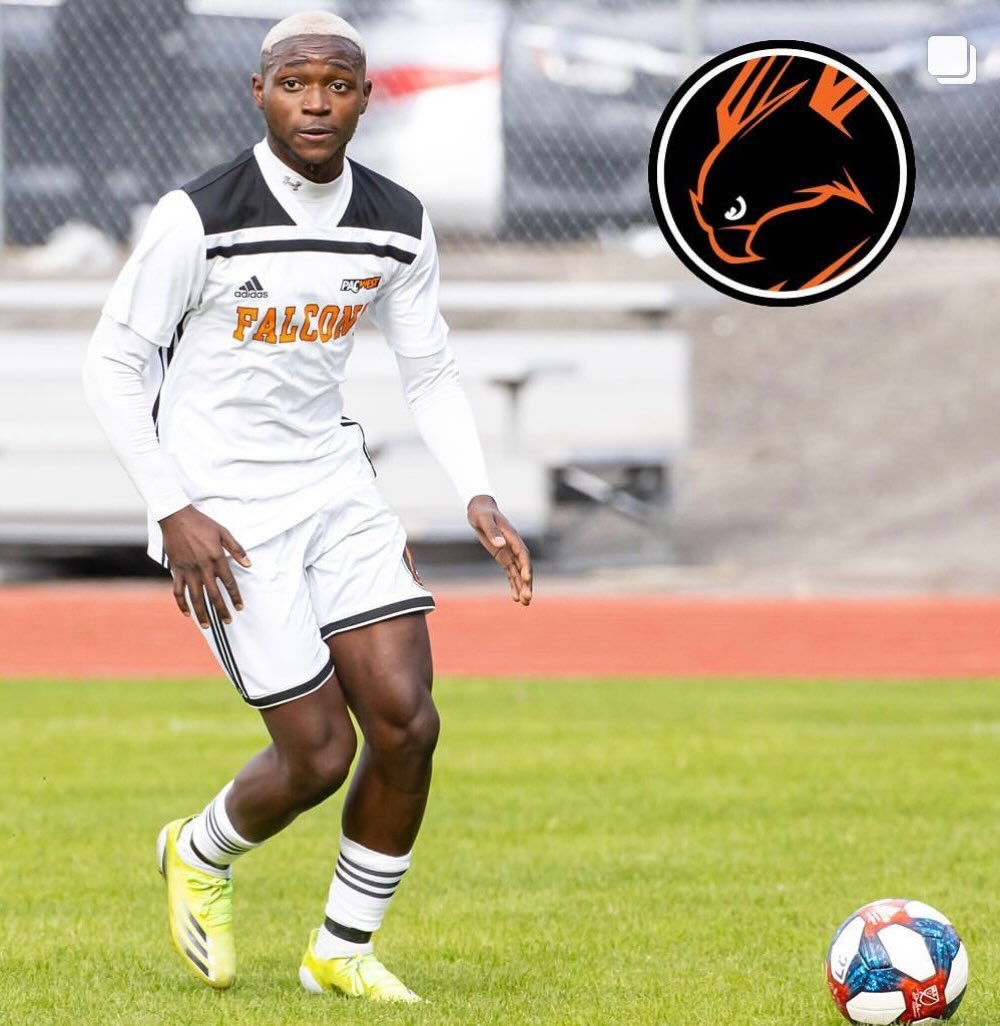
From 2021 to 2024, Wiz played for the Langara Falcons in PACWEST under head coach Marc Rizzardo. He's honest that it was on and off — he stepped away for a year around 2022–23 with things happening in his life, but it's where he was tested against men.
Playing up against older opposition, sometimes facing nineteen and twenty year olds when he was still sixteen or seventeen, took a physical toll. There were ankle sprains, knocks, a body not yet built to absorb that kind of contact and intensity. But he didn't let it keep him down, and it forged him into a sturdier player.
The proof came in his coach's own assessment. Rizzardo praised Wiz's technical ability, his pace, and his soccer IQ — and there's a quiet symmetry in that. The kid who knocked over cones in Tunisia, who was told flat-out that his technique wasn't there, was now being singled out for exactly that. He'd closed the gap himself.
The Personality on the Pitch
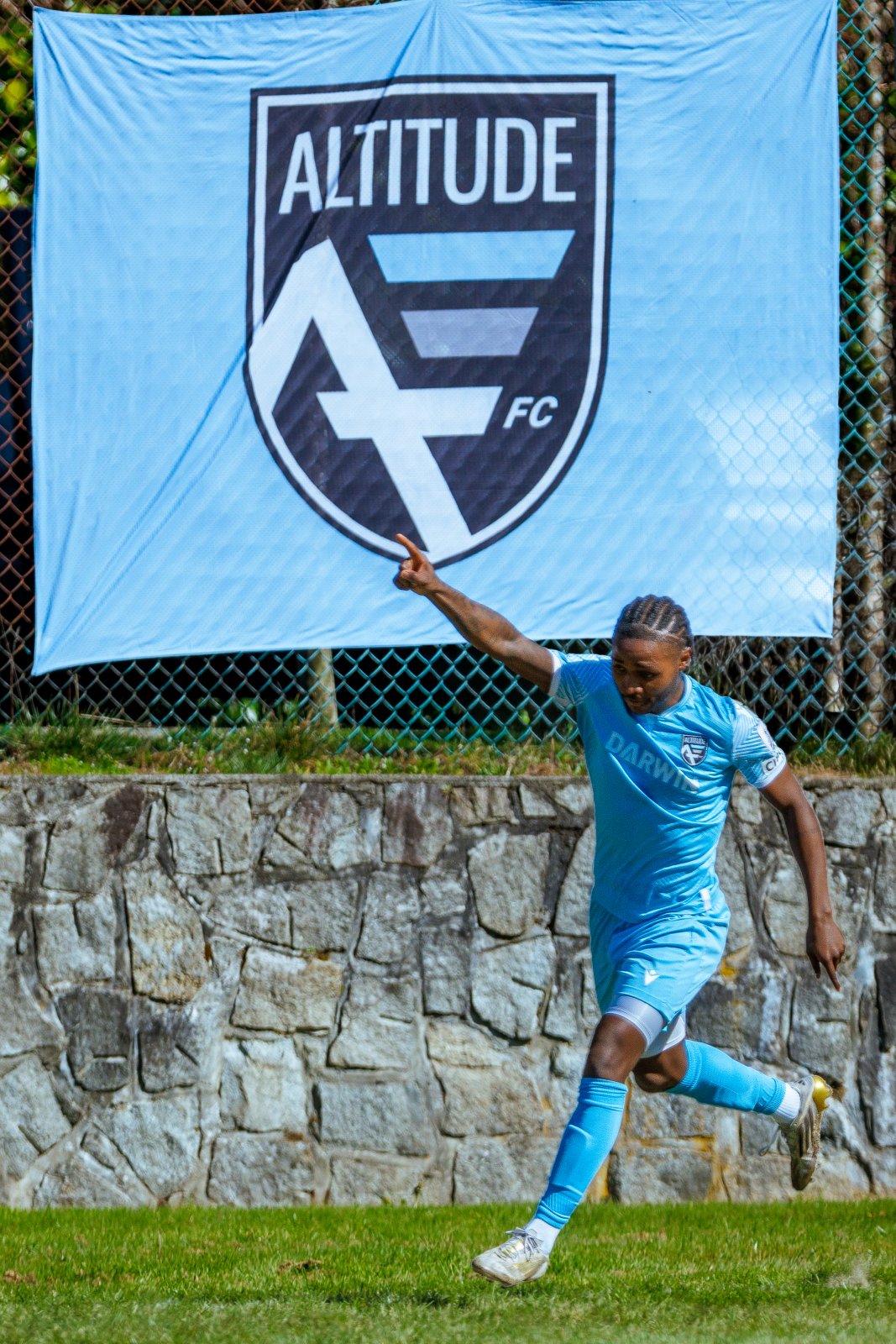
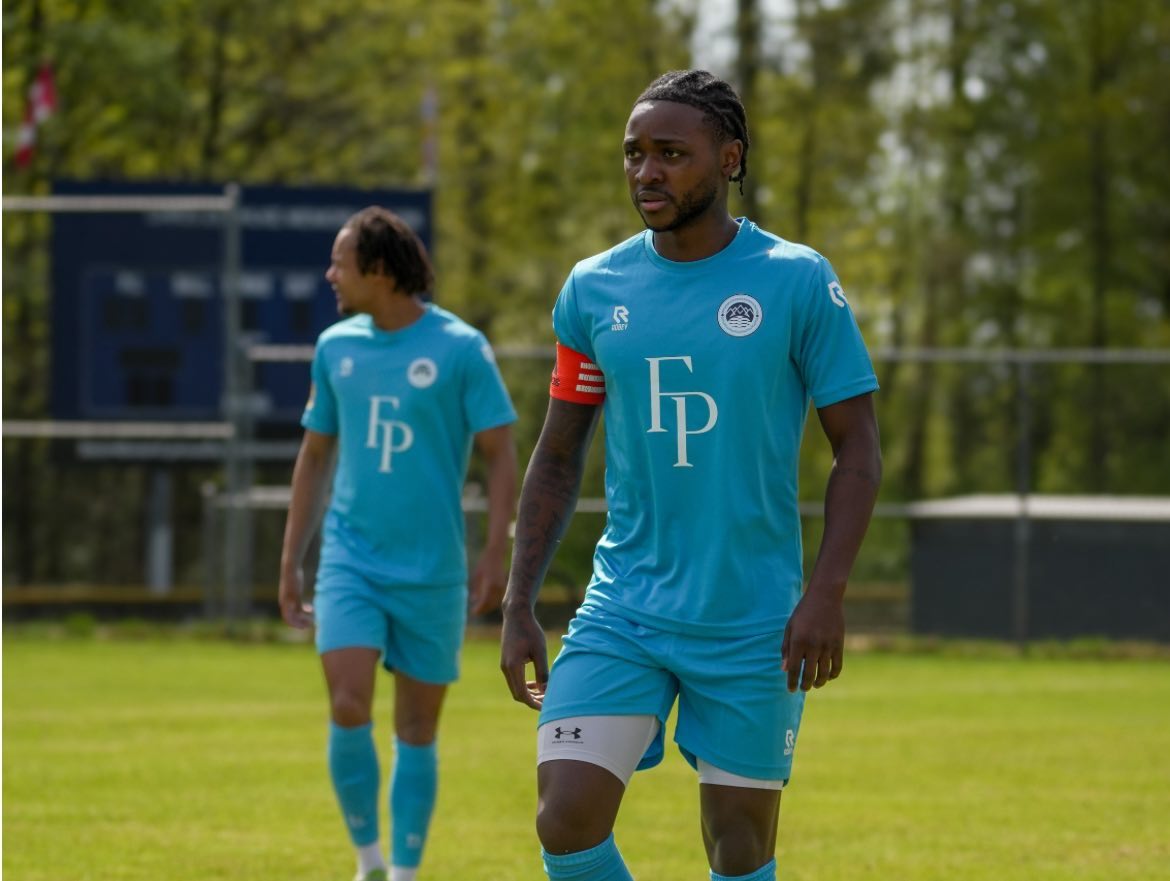
Wiz is now in his fifth season with Altitude FC, having signed in 2022 for the inaugural League1 BC campaign, with Faly Basse coaching the men's side and old Langara faces like Rafael Jorge around him.
He'll tell you about the quality he's shared a field with — the season Altitude finished second, losing to a TSS side he still calls the best team he's ever played on, full of players who went on to clubs in Romania, Portugal, and Poland. He'll tell you about the characters, too, the kind of teammates who have each other's backs on a night out as much as in a match. There's an honest catch to it all: these are amateur contracts. For all the pro-level talent in the room, nobody's getting paid yet.
But what makes Altitude matter to this story is simpler than any of that. It's where you can watch Wiz play and see the whole journey in ninety minutes — the speed bursting down the flank, the joy in the celebration, the personality that's impossible to miss. Watch a single half and the thought arrives on its own: this guy is different.
The Spotlight
Wiz wants to play professionally. He says it plainly, and he's closer to it than his quiet public profile would suggest.

He's honest about the setbacks. He spent several months in the Whitecaps' academy system during COVID and was ultimately cut, but he came away having seen exactly what the level demands. He's wary of pay-to-play ID camps and combines, skeptical of any path that asks a hundred and fifty kids to buy their hopes up. His belief is the opposite of that hustle: if you keep doing the right thing, the right people eventually see you, and when a team truly wants you, they make it known.
Lately, the doors have started to open. He recently got his Canadian passport, which for a player is a genuine game-changer. He works part-time with Fairfax Partners — Altitude's sponsor, a venture capital and investor relations firm — coordinating the flow of information behind the scenes, and they also handle some player representation for him. The firm has already sent Altitude players to a club in Portugal's fifth division, where they signed. Now Wiz is waiting on the Portuguese preseason for his own shot to go over and do his thing.
There's a small grace note hidden in that destination. He's been to Lisbon once before, as a kid, on a school trip with the choir he sang in back in Tunisia. He was too young to remember much beyond the warmth and the good feeling of the place. He may be about to go back to get paid to play the game he learned on a sandy road.
His Rock
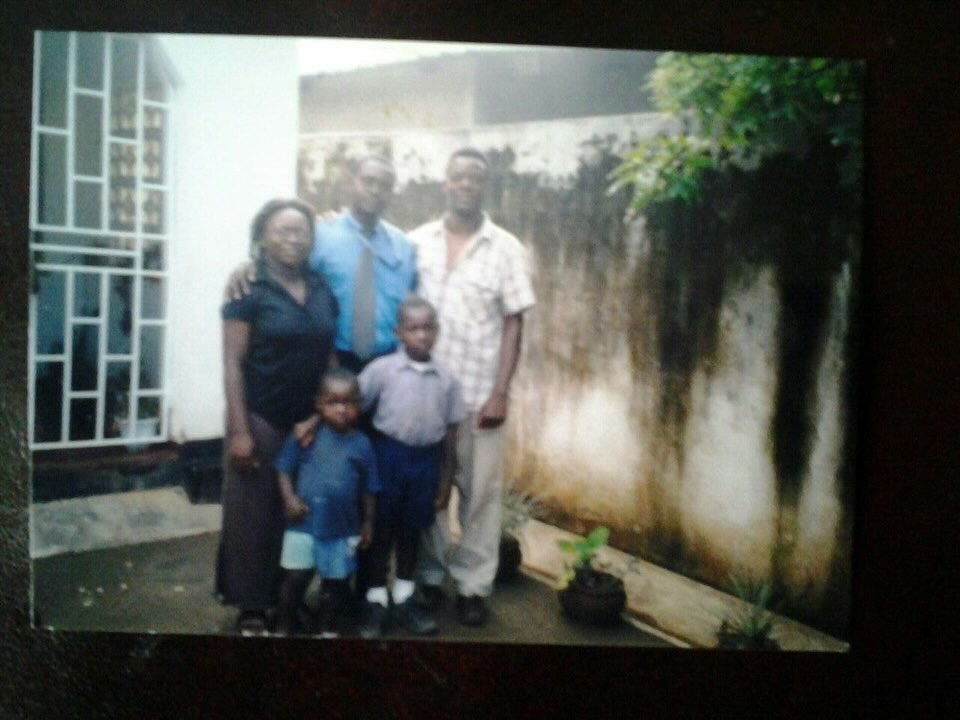
For all the coaches and mentors who shaped Wiz's path, there's one person who belongs at the center of it — and she didn't arrive in the story until 2021.
That year, following a separation, his mother moved to Vancouver to join her two sons. Where his father's instinct had always been to steer him toward a solid education, she was the one who had his back on football from the start, the one who believed in the dream and made room for it. Since coming here, he says, she's made life easier in more ways than he can count.
He doesn't hedge about any of it. He's a momma's boy, and he says so proudly.
She carries a light of her own, too. She makes music, and back in Malawi she's well known for her singing — which means the choir Wiz sang in as a boy was no accident of the family. Canada has given her a bigger platform for her own aspirations, a chance to chase something that belongs to her. But she has always, in his words, been a mom first.
There are things she's been through for Wiz and his brother that he can only describe as unconditional love in its fullest form — the kind you don't entirely understand until you're old enough to see what it cost. She's his rock. Whatever comes next, in Portugal or anywhere else, she's the foundation underneath it.
Let It Mold You
Ask Wiz what he'd tell the eleven-year-old version of himself, and he doesn't reach for anything soft.
"Embrace that adversity," he says. "Embrace all those trials and tribulations. The truth is, it's not easy. It just isn't. There's no shortcut, no magic spell that makes anything go away. So get used to that adversity, and let it mould you and not break you."
He means it as more than a soccer lesson, though it works there too. Everyone has their demons, he says — the person who looks completely at peace is carrying something you can't see. What separates people is the daily, conscious decision of how they react to it.
Lose the ball, what are you gonna do, cry? No. You start running back.
— Wiz Chavula
That's the thing about Wiz. Positivity isn't naïveté, and it isn't an accident. It's a decision he makes over and over — a kid who had every reason to let the road break him, and who chose, again and again, to let it build him into who he is.
