

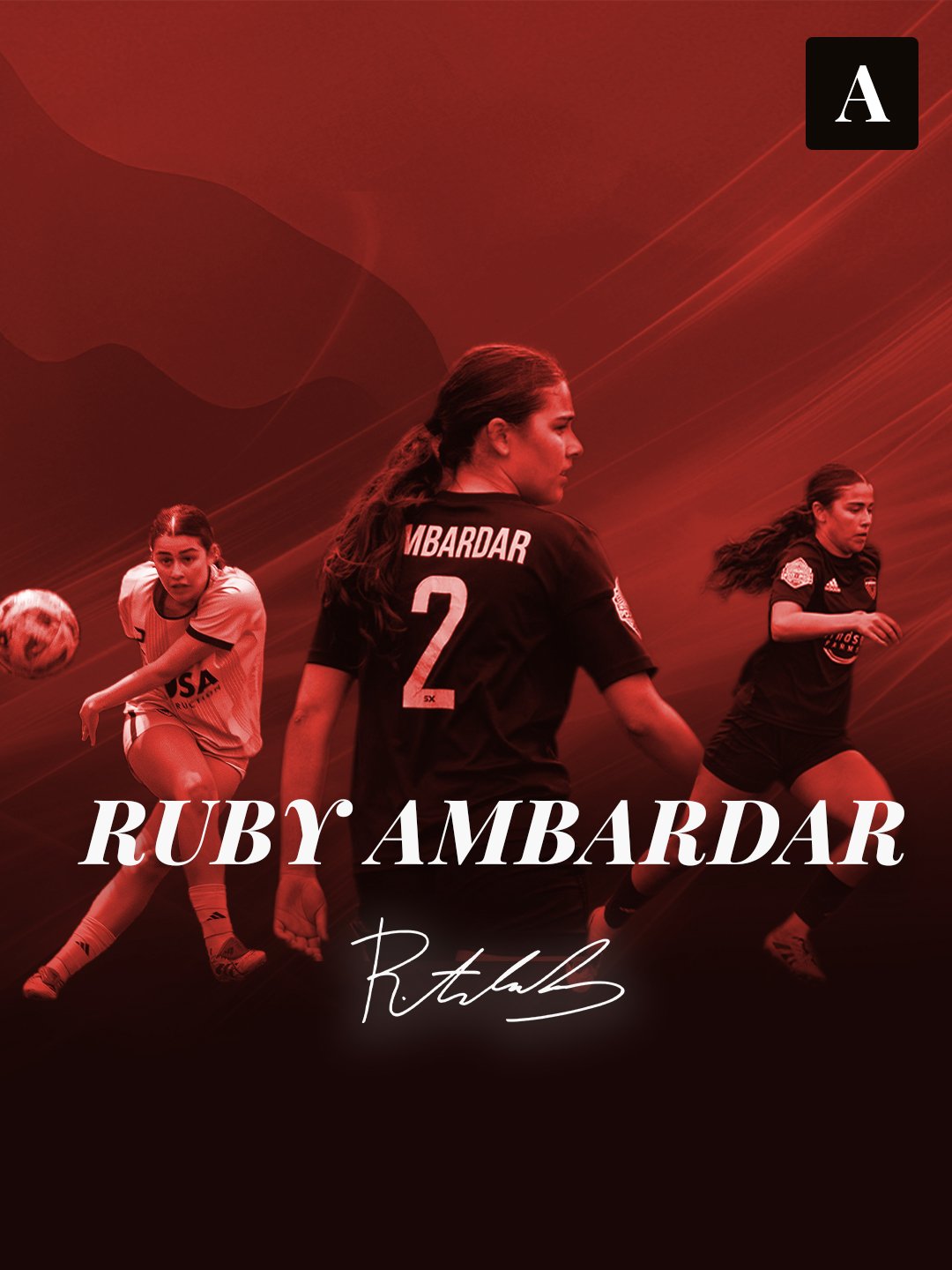
The Long Run
In the spring of grade six, just after Ruby Ambardar made the Fusion FC BCSPL team, the world locked down.
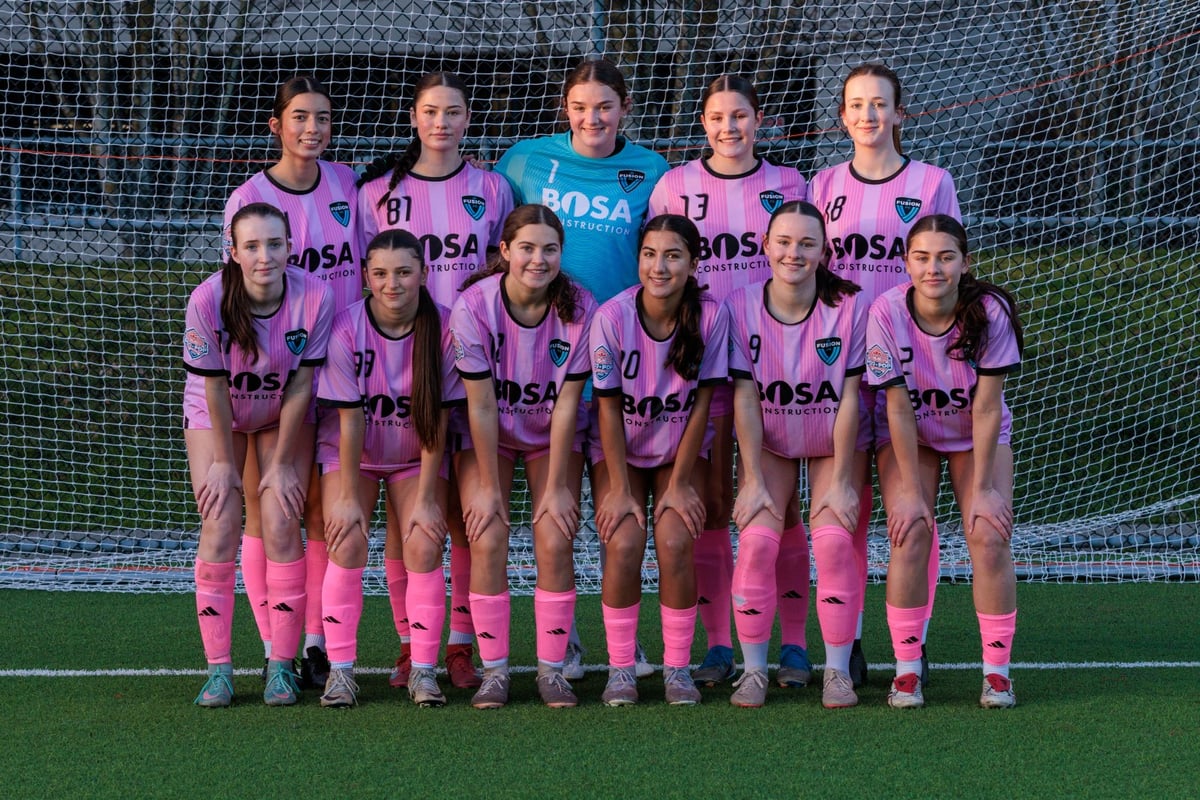
Her new teammates had taken the team photo holding their jerseys at a meeting that turned out to be the last in-person thing they did together for months. The Fusion team Ruby had been chasing for years became, overnight, an idea more than a roster.
The team kept itself together where it could. Zoom workouts. Fitness plans. A return to training that put each girl inside her own distanced box, dribbling alone with a coach calling instructions across a fence. None of it was really the thing.
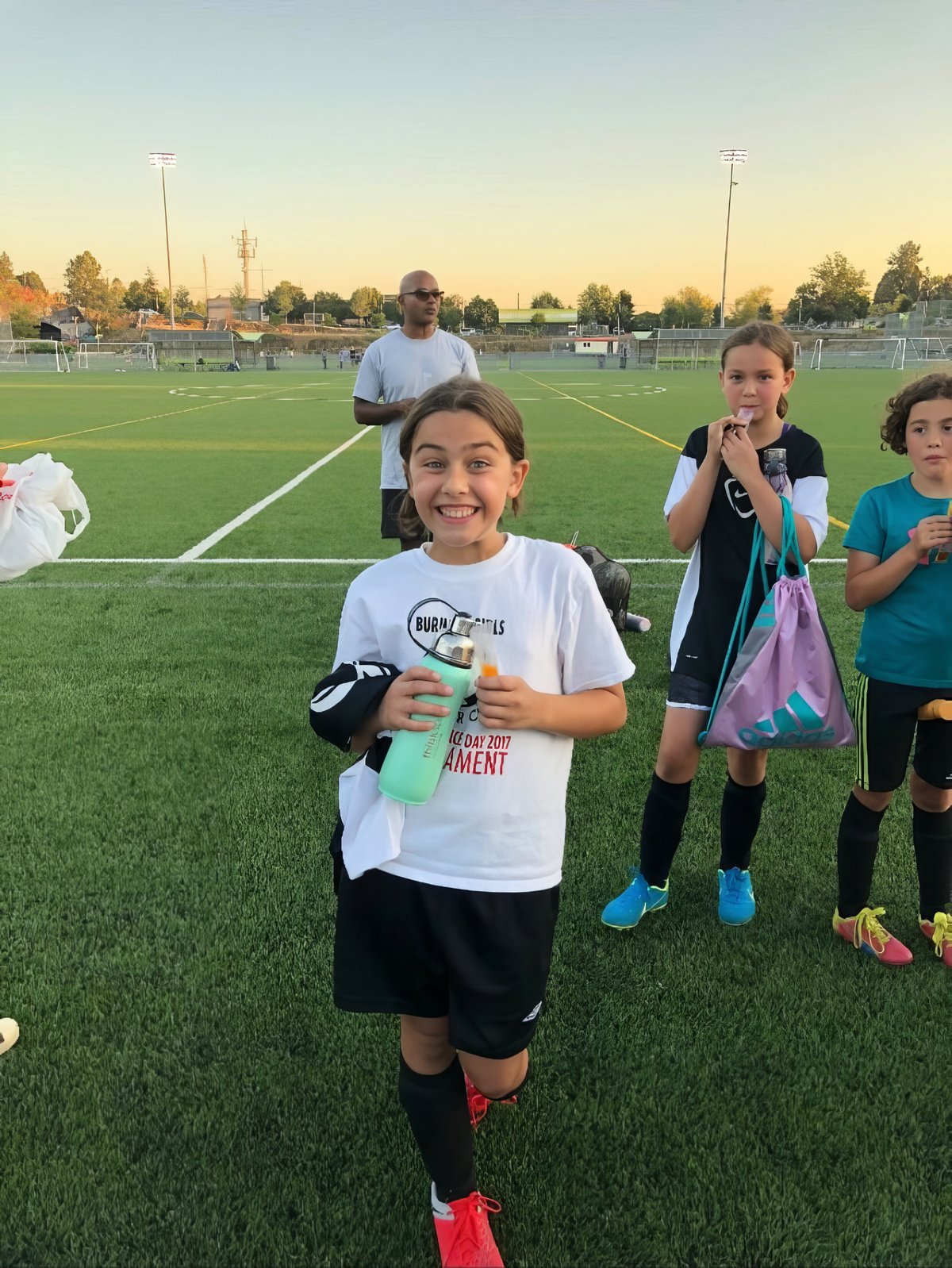
By grade seven, Ruby had built her own answer. She lived close to two of her teammates, Roma Cocco and Sierra, the team's eventual captain. The three of them met most mornings before online school and ran. No coach was watching. There was no practice to make up for, no parent driving the schedule. They were twelve and thirteen years old, and they were running because the thing they loved had been taken away from them, and lacing up was the only piece of it they could still touch.
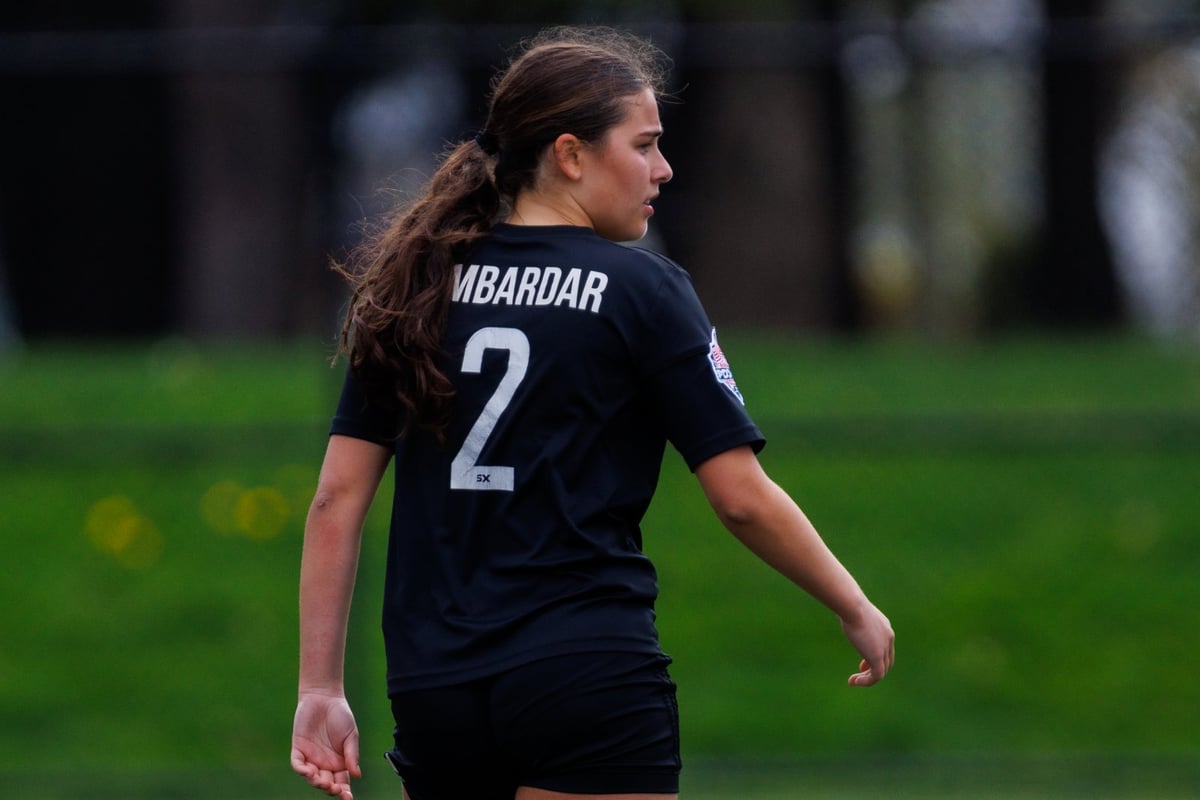
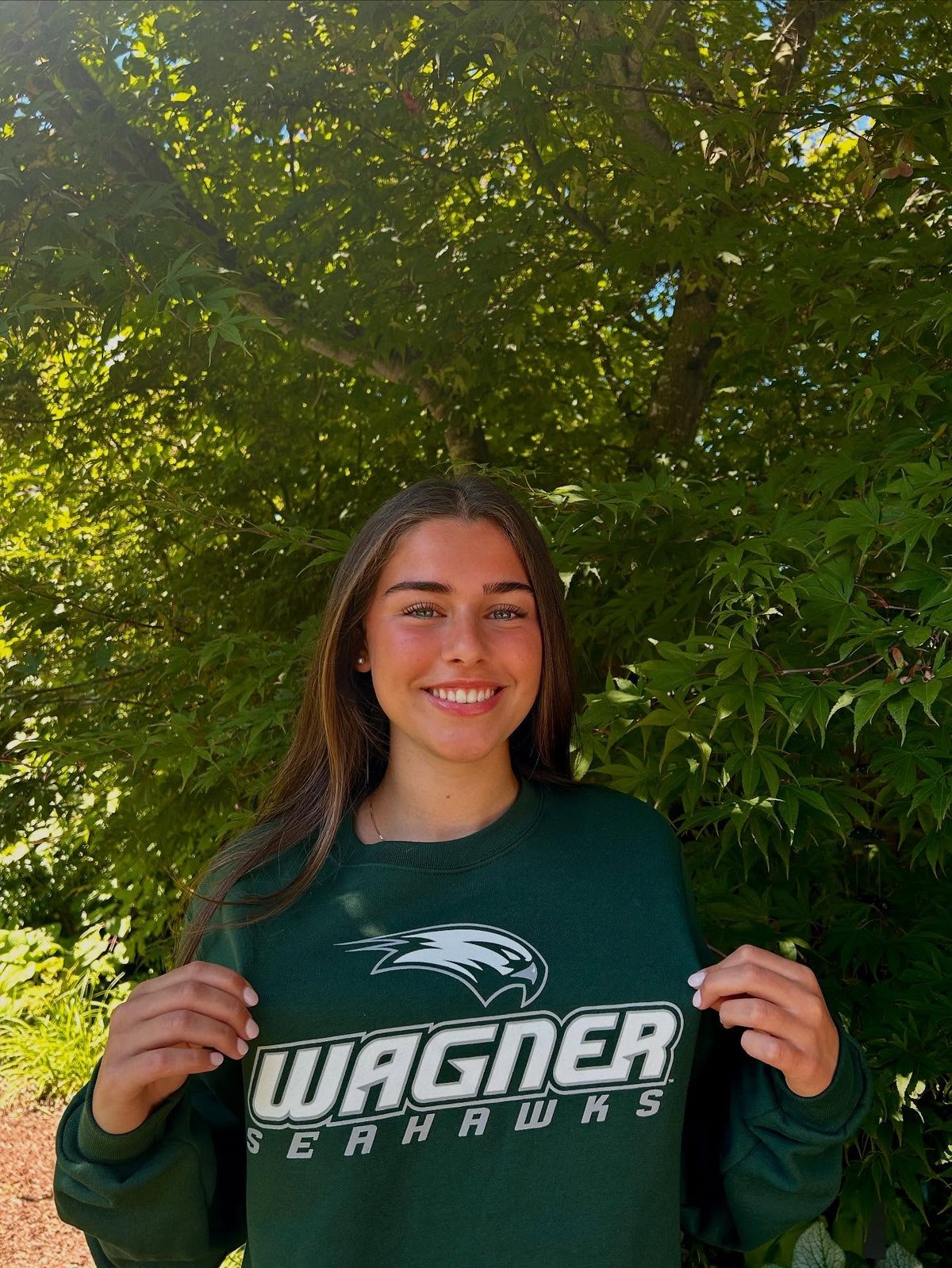
Six years later, Ruby is the right-side fullback at Fusion who covers the entire sideline for ninety minutes and does not come off. She is committed to Wagner College, a D1 program on Staten Island, where she will arrive in late July as one of seven incoming freshmen on a team that just made the NCAA tournament for the first time in its history.
The engine she plays with now was built six years ago, on Vancouver pavement, by a kid who did not need anyone to tell her to do it. The story is not really one of transformation. It is the same player doing the same work, for long enough that the rest of the world finally caught up.
The House
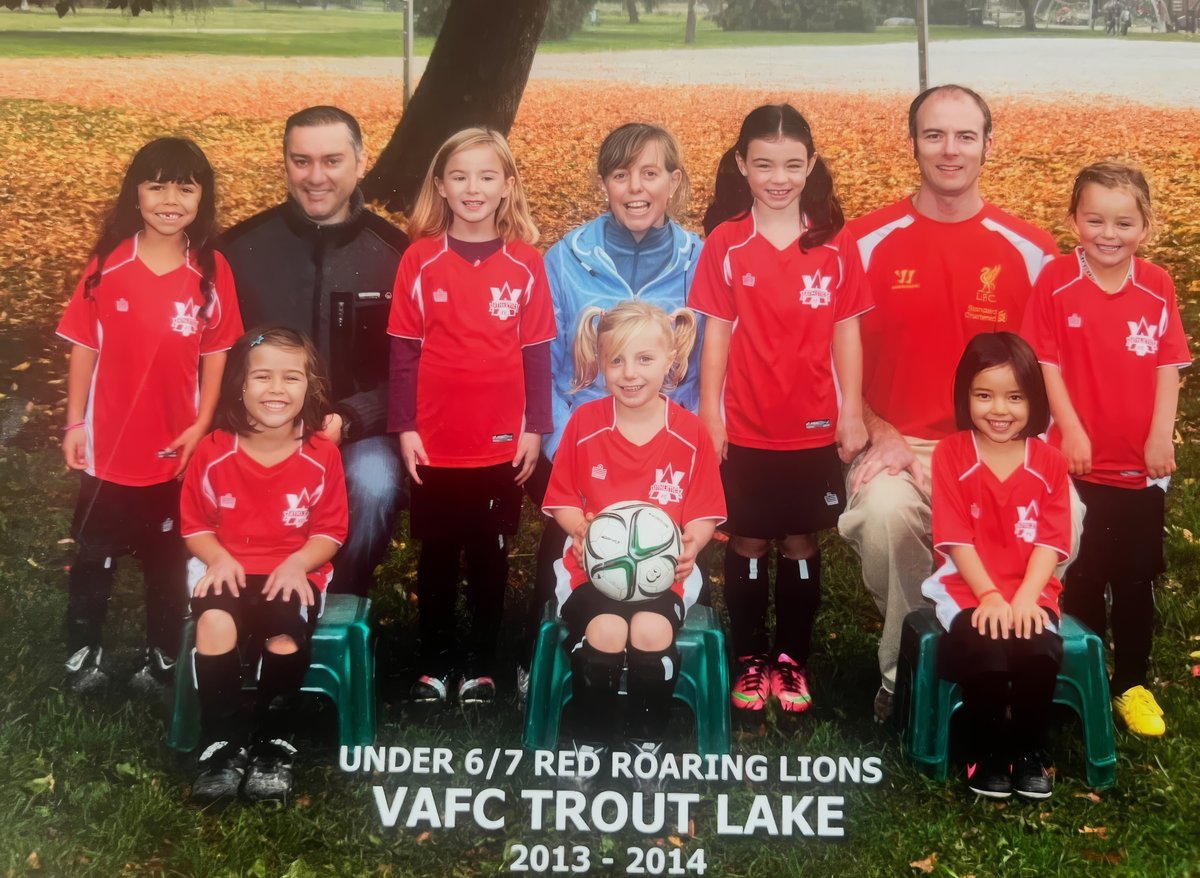
Ruby's dad, Bob, was her first coach.
He grew up in Canada. His family is from Kashmir, where the lighter features on his side of the family come from. His mother has green eyes. Ruby does too.
He played soccer his whole life and has not stopped. When Ruby was five, he signed her up at VAFC, the Vancouver Athletic Football Club, and stood on the touchline as her coach. He coached her through house league and into the gold team a few years later. He has since coached her younger sister Briege the same way. He still plays himself. The thing he wanted to pass on to his daughters was not a career or a path. It was the game.
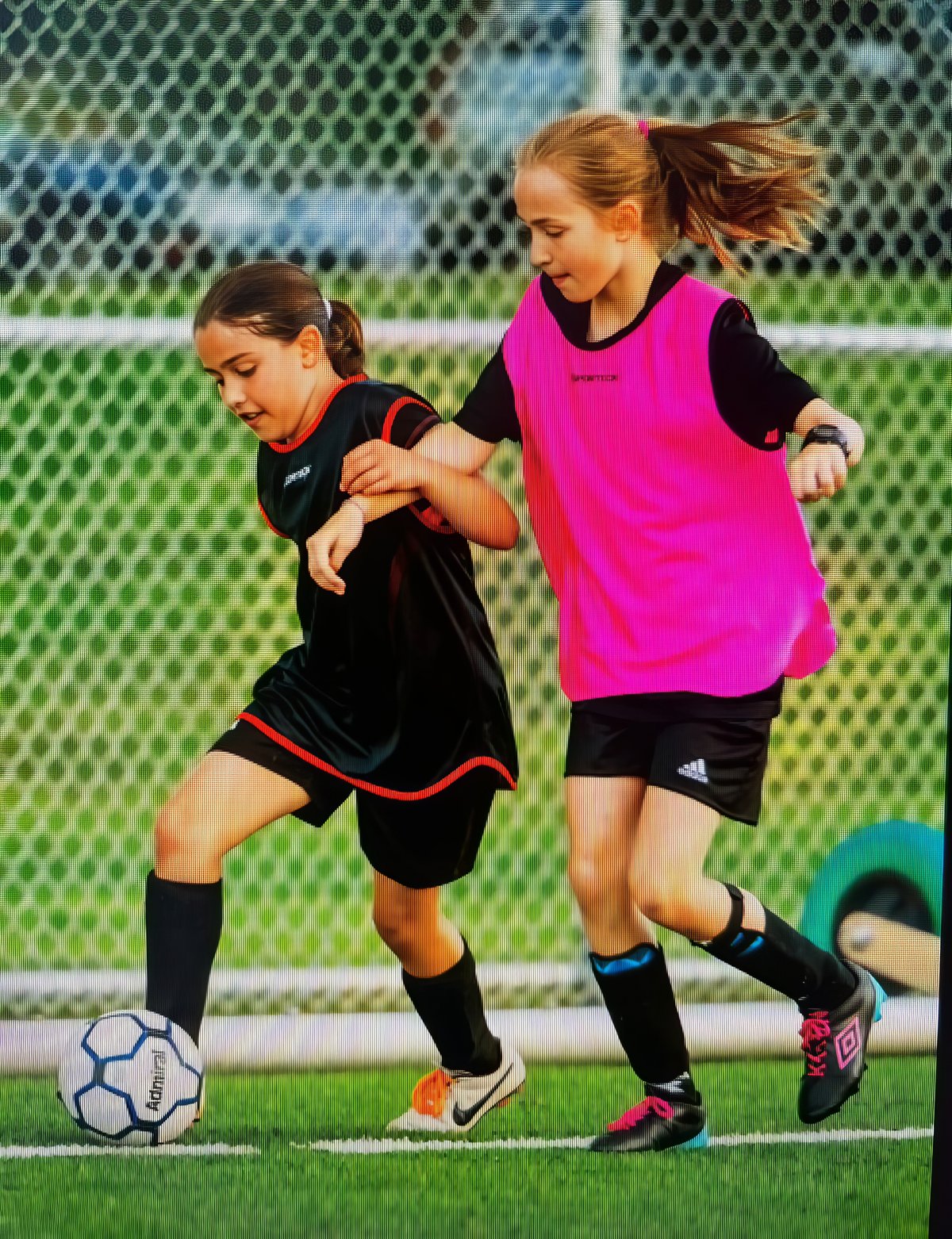
Ruby's mom, Jane, grew up near Belfast. She dabbled in netball as a kid, never competitively. She moved to Canada as an adult. The two of them met in England, working, and settled in Vancouver. Ruby was born with Irish citizenship, a passport that would turn out to matter more than anyone planned.
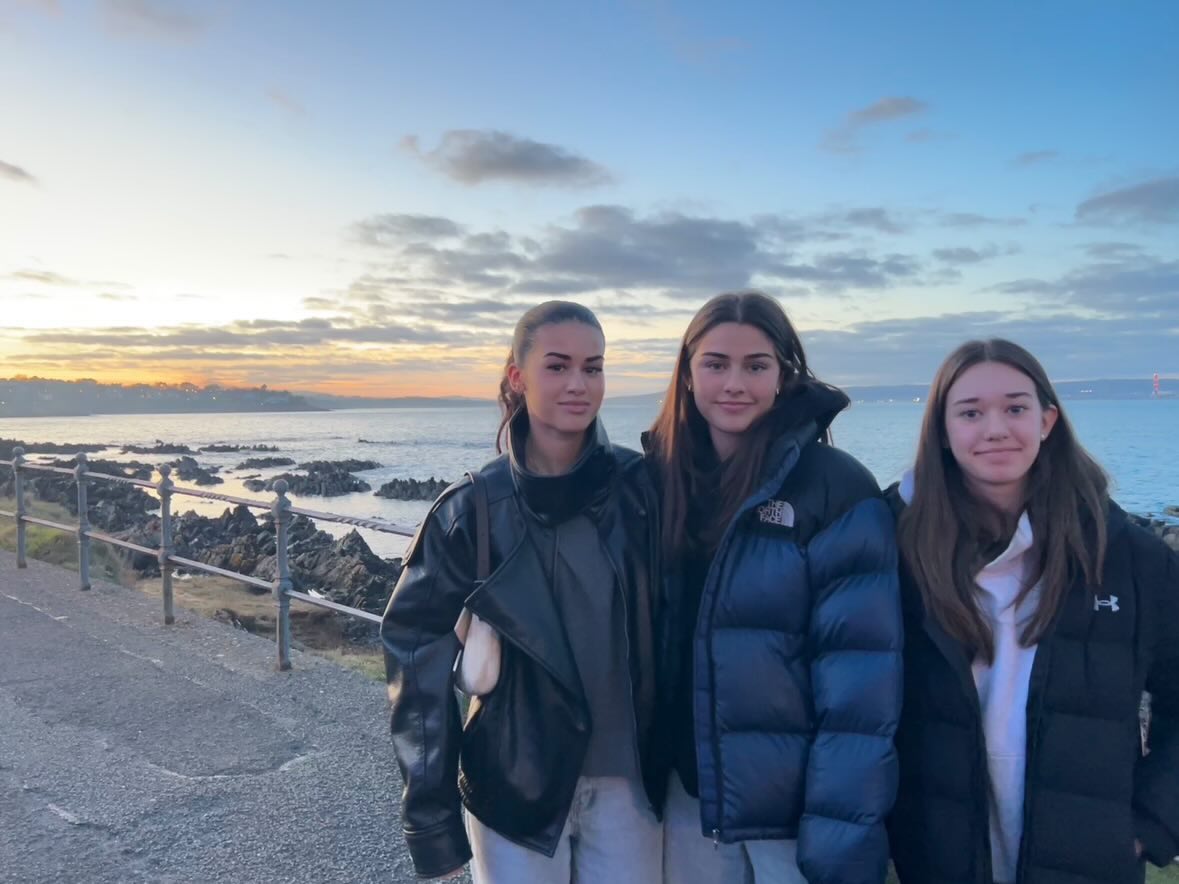
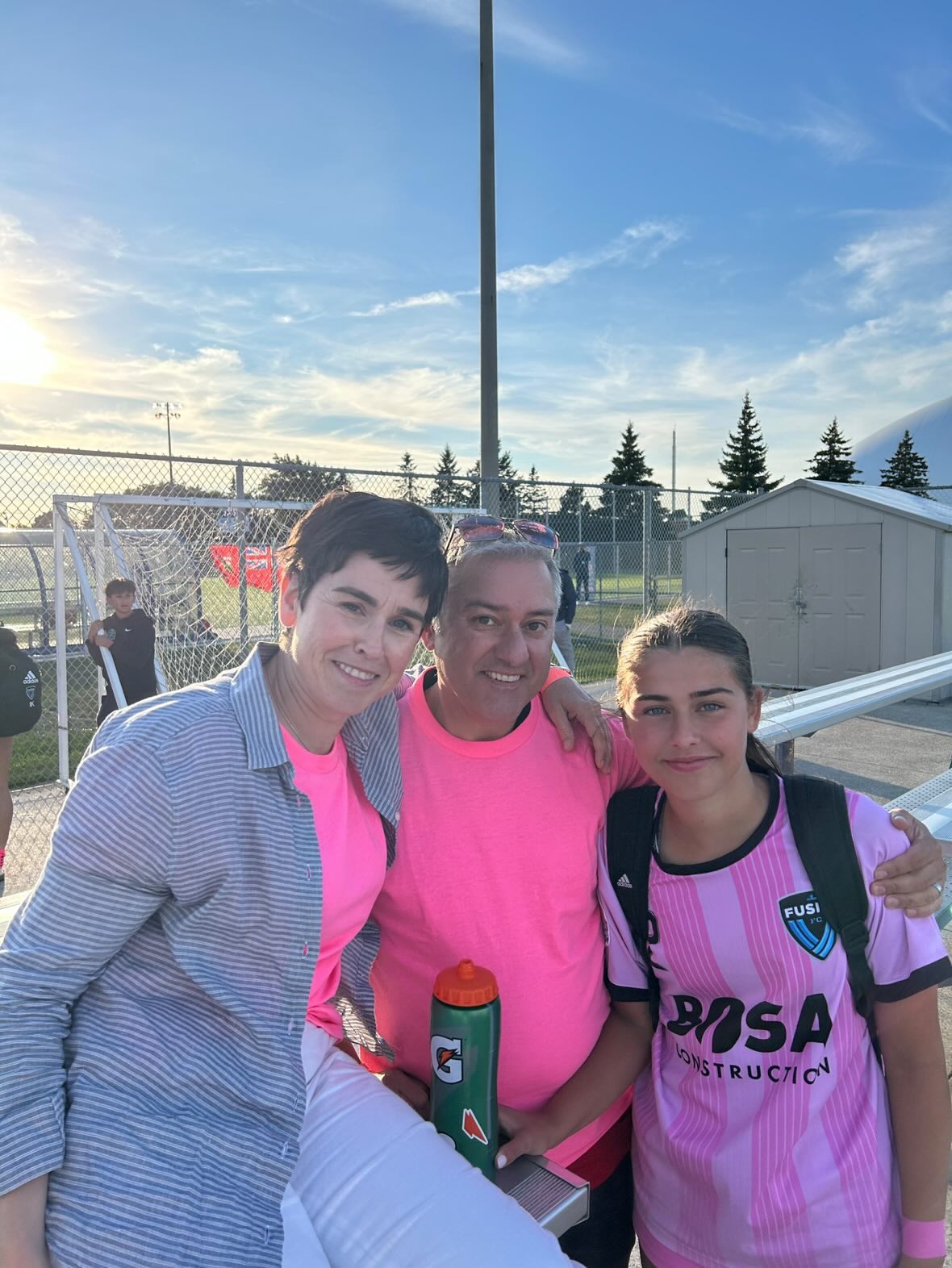
There are three Ambardar sisters. An older sister who tried soccer at five and decided it was not for her. Ruby in the middle. And Briege in grade nine, who plays for VAFC and is into field hockey too. The soccer in the house has always been Ruby's lane.
When Ruby talks about her dad, the word she uses is supportive. When she got an offer from a D1 school across the country, he flew with her to see the campus. When she had to make the call on where to go, he told her wherever she wanted to go was fine.
Her mom is the one who sees the opening. The trial that opened the door to the Republic of Ireland youth national team did not happen because Ruby decided to make it happen. It happened because her mom saw the opportunity before Ruby did, made the case for it, and kept the door open until Ruby walked through.
VAFC
In Ruby's first year of organized soccer, every goal scored by her team was scored by a girl named Mackenzie. Mackenzie was a force at five years old. She would go on to play for Fusion's 2007 BCSPL team and is now playing NCAA soccer at Indiana State.
The next season, Mackenzie left. Ruby took over the scoring.
That is the moment she points to as the one that locked her in. Not the moment she fell in love with soccer, which was already there. The moment she fell in love with being the one who scored.
She was aggressive from the start. She drew a lot of fouls. Her hard kick was a toe-punt. The technique would come later. The aggression was already there.
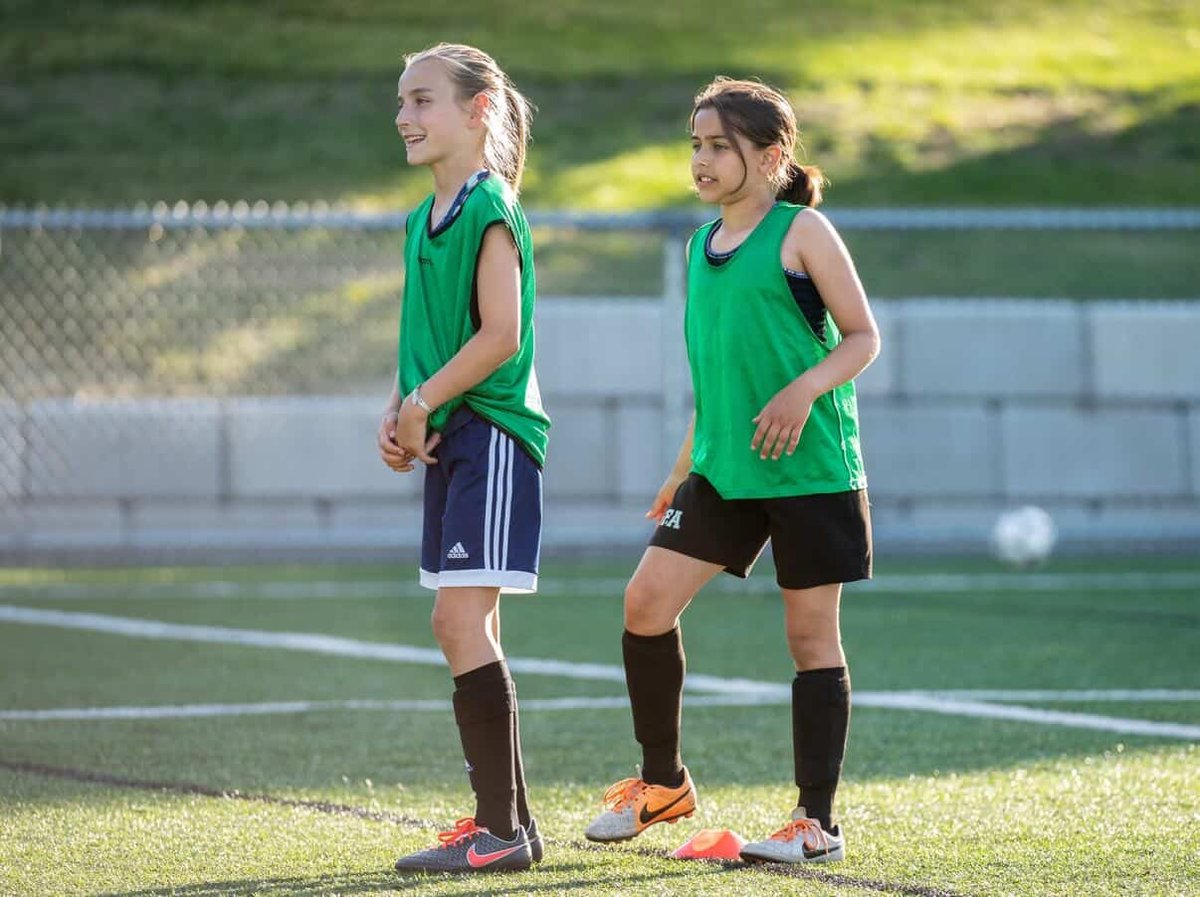
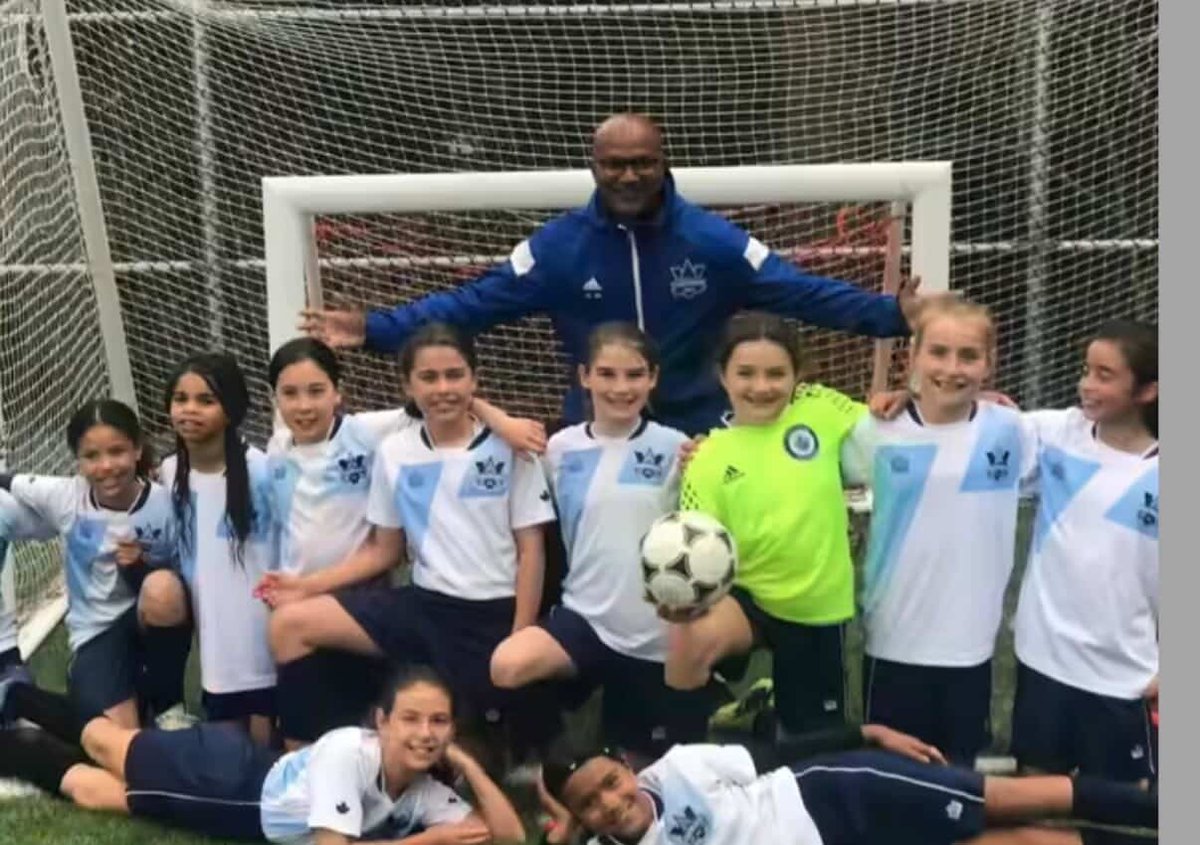
VAFC eventually moved into tryouts: gold, silver, bronze. Ruby always wanted gold. Her dad coached her on it for a stretch. Paige Morris and Kiera Fujita were coming up through the same VAFC house league, on different teams. The main rival to Ruby's gold team was Alvin's gold team, and at some point the two groups merged in the way youth soccer always does, and Alvin became Ruby's coach. The group of girls he was working with at that point reads like a roster of this entire interview series: Paige, Kiera, Roma, Eila. The Empire Field stairs, the running in the rain in socks. Ruby was there for all of it.
The Level
At the age Ruby made the jump to BCSPL, she thought Fusion FC was the level. She did not know Fusion was a club. There was no TSS in her head. No rival academy, no second roster, no real second option. There was Fusion, there was Mountain, and that was about it.
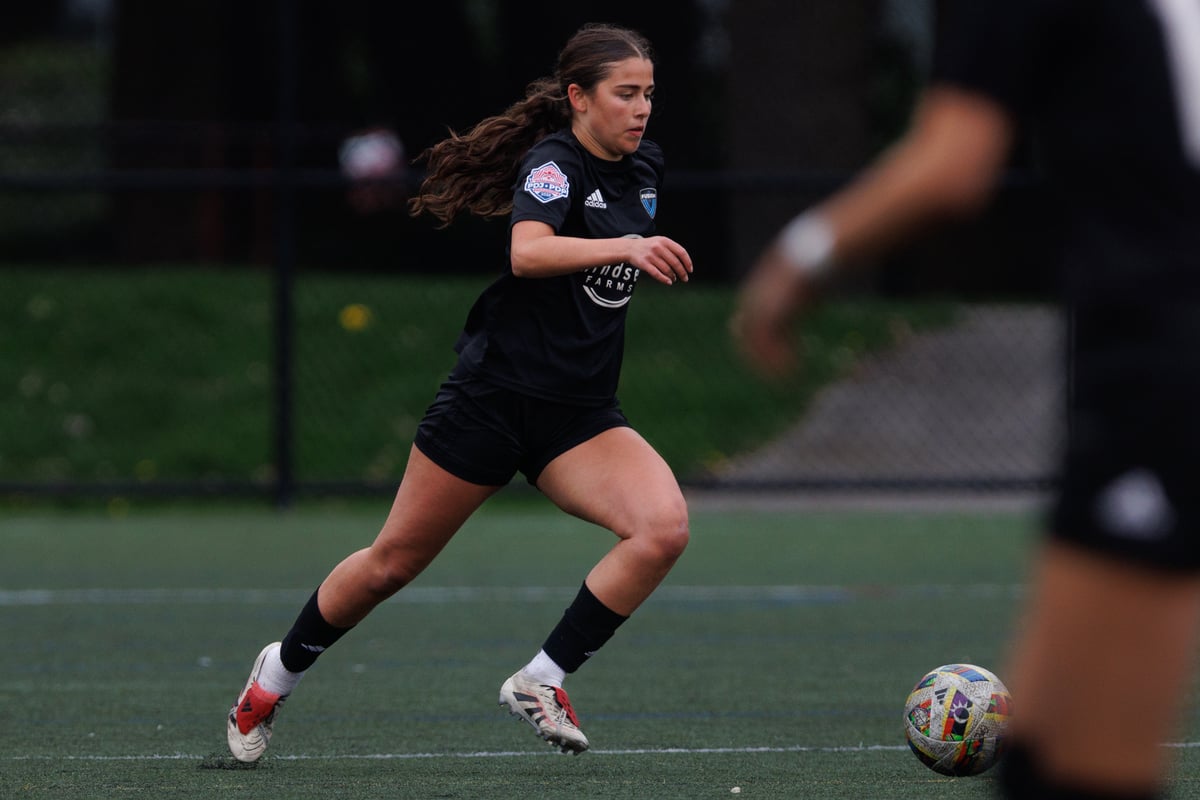
Two of the girls she had come up with on Alvin's gold team went the other way. Paige and Kiera ended up at TSS. Ruby, Roma, and Eila went to Fusion. That was the path Ruby had always seen herself on, and she walked it.
The Quiet Work
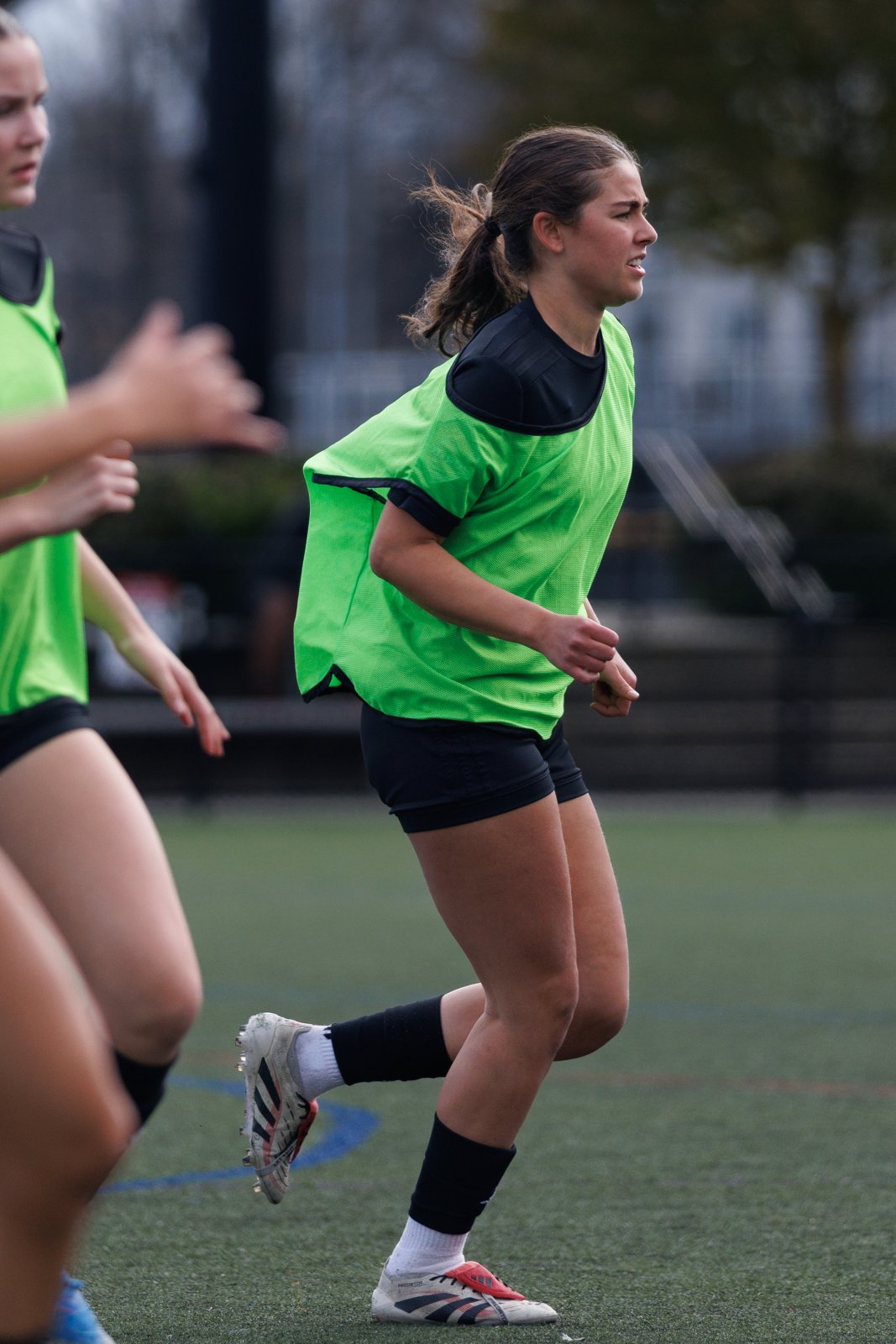
Through that same stretch, Ruby was also doing Volf, a technical training program, on the side. A year of it, maybe two, on top of everything else.
None of it was performative. None of it was for the team's group chat. It was just the work, before anyone was watching.
This is the part of Ruby that has not changed since.
The Strength
In grade ten, Ruby added another layer.
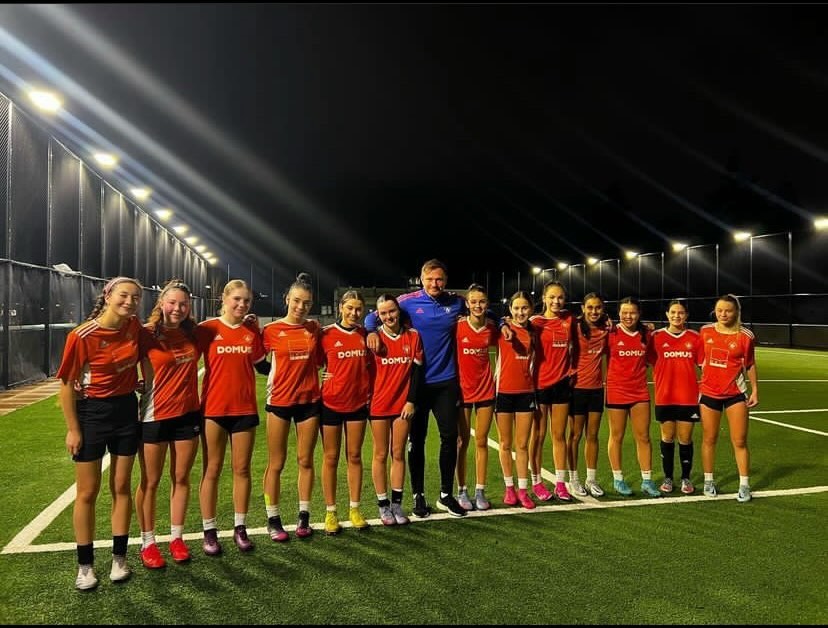
She started strength training in the mornings before school. The trainer is Sean, also Irish, who runs Scienced Athletics, after years at Fortius before it closed. The sessions were not glamorous. They were before sunrise. They were every week, year-round.
In a year, the results were visible. People at her games started saying it to her face. You look strong. You look fast. It was not a position change. It was not a tactical breakthrough. It was the result of a year of pre-dawn sessions she had not advertised.
It also did something quieter than the strength itself. The strength gave her confidence in her own body. The fitness was no longer something she hoped she had. It was something she had built, and she could feel it.
Fullbacks nowadays, it's a lot more of a role than just defending. I can be really aggressive, and also get up and help with the attack.
— Ruby Ambardar
Fullback
In August 2024, John came back to Fusion as the head coach for his second stint, and he switched the team to a 4-4-2.
A 4-4-2 has no wingers. The wingers became wingbacks. Ruby was one of them. She slid back to fullback.
She had spent most of her Fusion career playing wide, mostly winger, sometimes midfield. She was good in those years. She was reading the game. She was running for days. She had all the tools. Her consistency was a different story, and she was harder on herself about it than anyone else was. The good games were very good. The harder ones sat with her too long. What she did not have yet, until the formation change, was a position that let her use every one of them at once.
Fullback did.
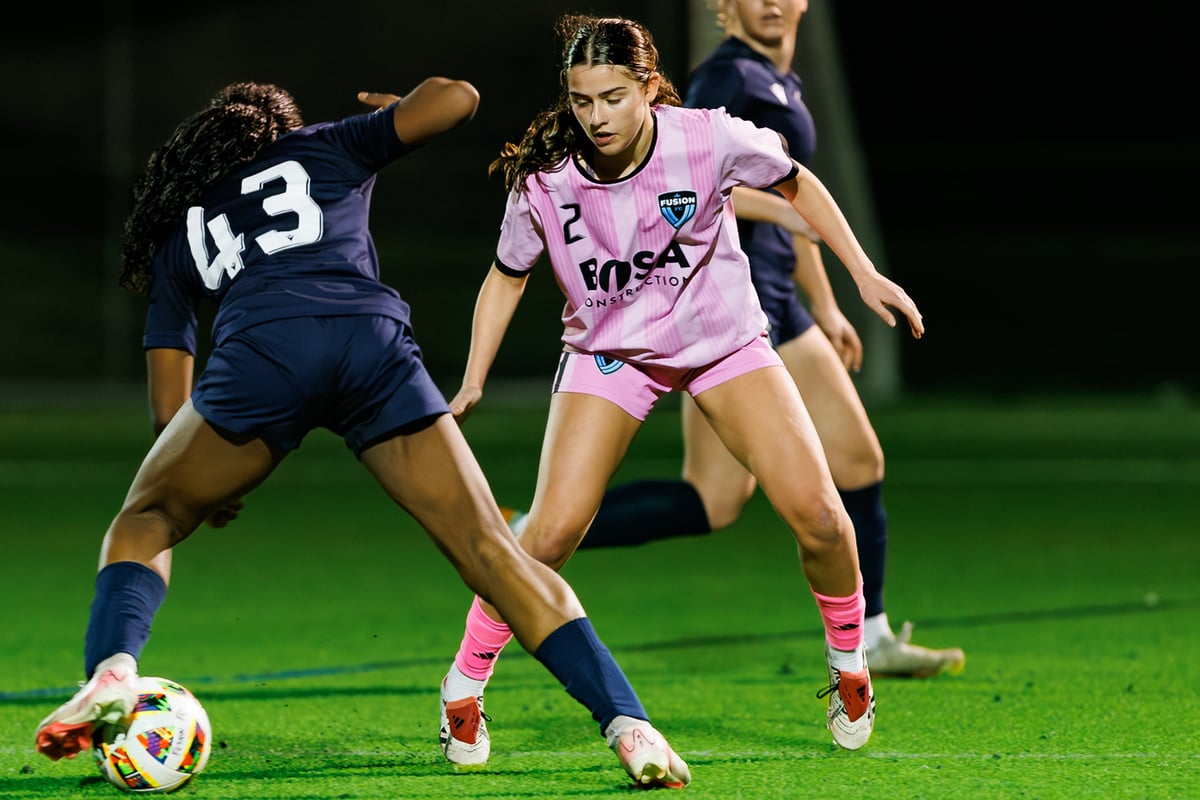
Everything she had built came with her. The reading of the play, the awareness of where her teammates were, the willingness to communicate. The aggression that had drawn fouls at six finally had a place to live, since a fullback gets to be aggressive on purpose. The strength work let her cover the entire right side of the pitch and recover, over and over, for ninety minutes. The Alphonso Davies version of the position, the one where the fullback is the engine driving the attack, is the one she has grown into. Her game shifted. She thinks more now about her passing and her crossing than her shot.
She has scored a few goals from her new position. A volley against the Coquitlam women's team. A header in Kelowna at the start of grade eleven. The goal-counting Ruby is gone. The Ruby her teammates rely on now is doing different work, every minute, on both ends of the field.
The Year
The same season Ruby slid back to fullback, Fusion broke through.
They finished second in league play behind Metro Ford after years of getting beaten 8-0 by them. They beat Metro Ford that season for what Ruby believes is the first time. The team got ranked the fifth-best youth club team in Canada by FTF, an unofficial number but a real reflection of what they had become.
John's plan all along had been to win the league outright to lock in an automatic Nationals bid. They missed it by one team. Provincials became the only path.
Fusion got past Coastal in the semis. The other semi had Metro Ford against Surrey, and Fusion was rooting for Metro Ford, because Metro Ford had already locked up the league and a Metro Ford win would have meant Fusion got the auto bid through the back door. Surrey beat Metro Ford. Now Fusion had to win the final outright.
The final was a day the coaching staff went a different tactical direction, and Ruby was not in the starting eleven. She watched the cup get won from the bench. It is the kind of moment that is easy to tell a clean version of later and harder to live through in the moment. She stayed in it the whole game. She cheered every play. The team won. They were going to Nationals.
A few weeks later, on the bigger stage at Nationals, she walked back into the lineup and played some of her best soccer of the season.
We Made It
Ruby's favorite memory of her time at Fusion is not the Coquitlam win or the provincial cup or any single individual game.
It is Nationals.
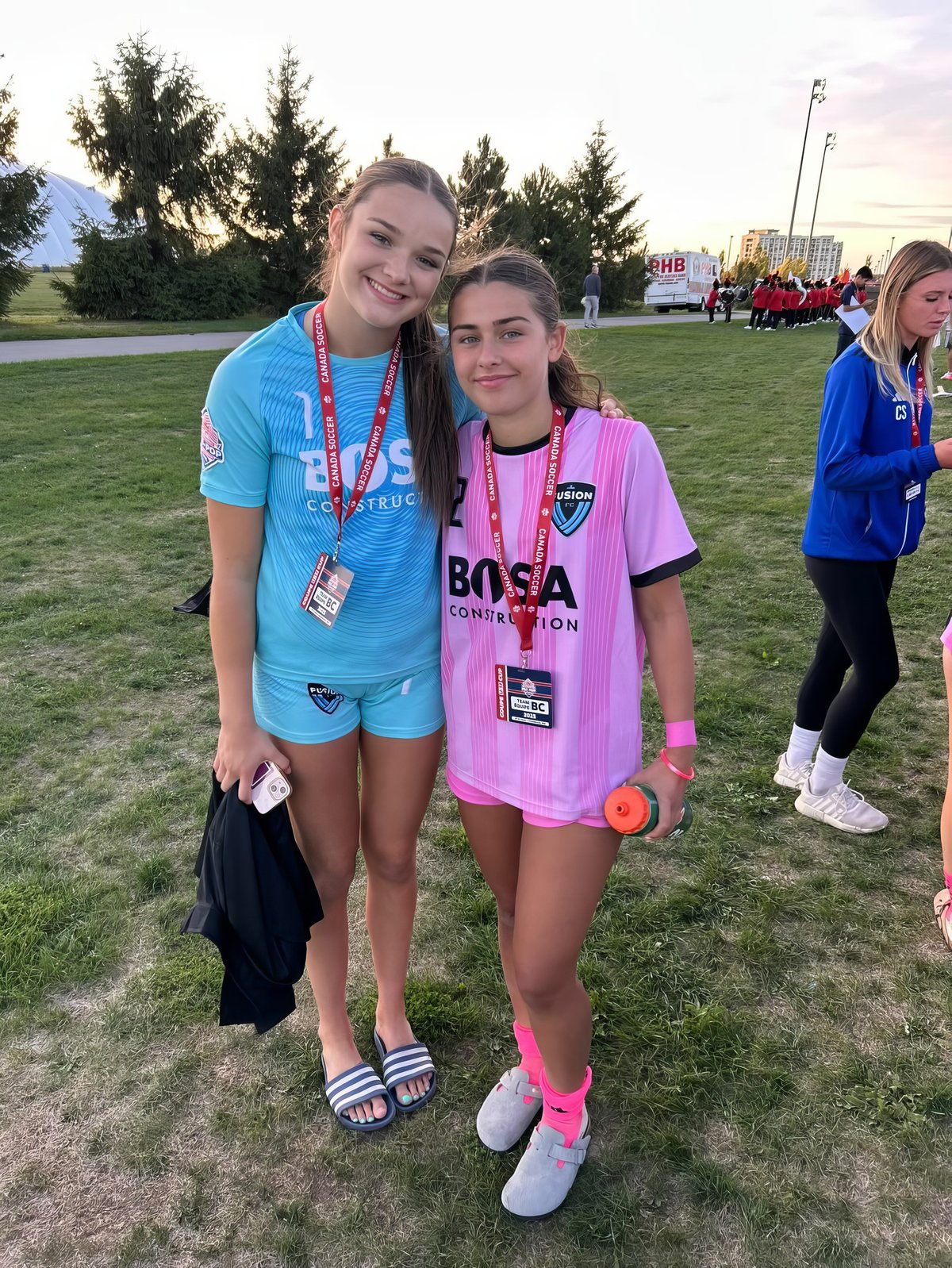
It is the moment she and the girls she had been running stairs with at Empire Field, dribbling alone in COVID boxes, lifting at sunrise, training together since grade six, looked at each other and realized they had done it. They had earned the right to be there. They had run all the laps. They had played all the games. Their coach had called it the Road to Nationals from a PowerPoint slide a year earlier and most of the room had thought he was insane, and now they were on the road for real.
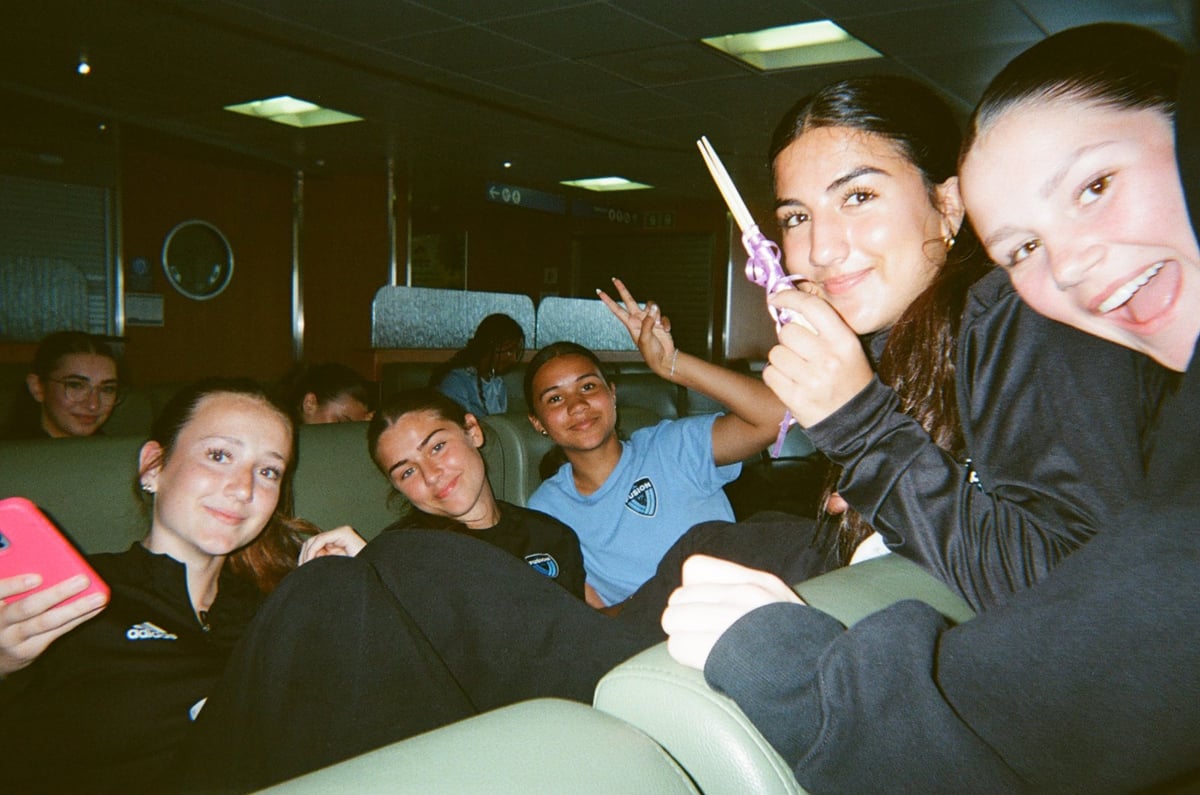
Her teammates are her best friends. That part is not a soccer fact. It is the actual emotional weight of this entire chapter of her life. The girls she has been side by side with since they were twelve are the people she trusts most in the world. The Nationals trip is the moment that bond stopped being theoretical and became the lived experience of the whole group.
The Inside Game
The note Ruby has gotten back from every coach she has ever asked is the same. She is very good. She sees the game well. The next step is trusting it as much as they already do. For Ruby, the work has never been about adding ability. It has been about catching up to the version of herself her coaches already see.
After the provincial cup, she got serious about that work. She started seeing a performance coach. The aim was not to be calm. The aim was to be able to come back, fast, after each play.
What she landed on, in her own words, is short memory. Not forgetting. Resetting. Make a mistake, breathe through it, the next play is a clean one. Focus on the positives, more deliberately than feels natural. Stop sourcing your validation from the coach. Source it from your own performance. If you cannot be your own number-one fan, you cannot expect anyone else to sign up for the job.
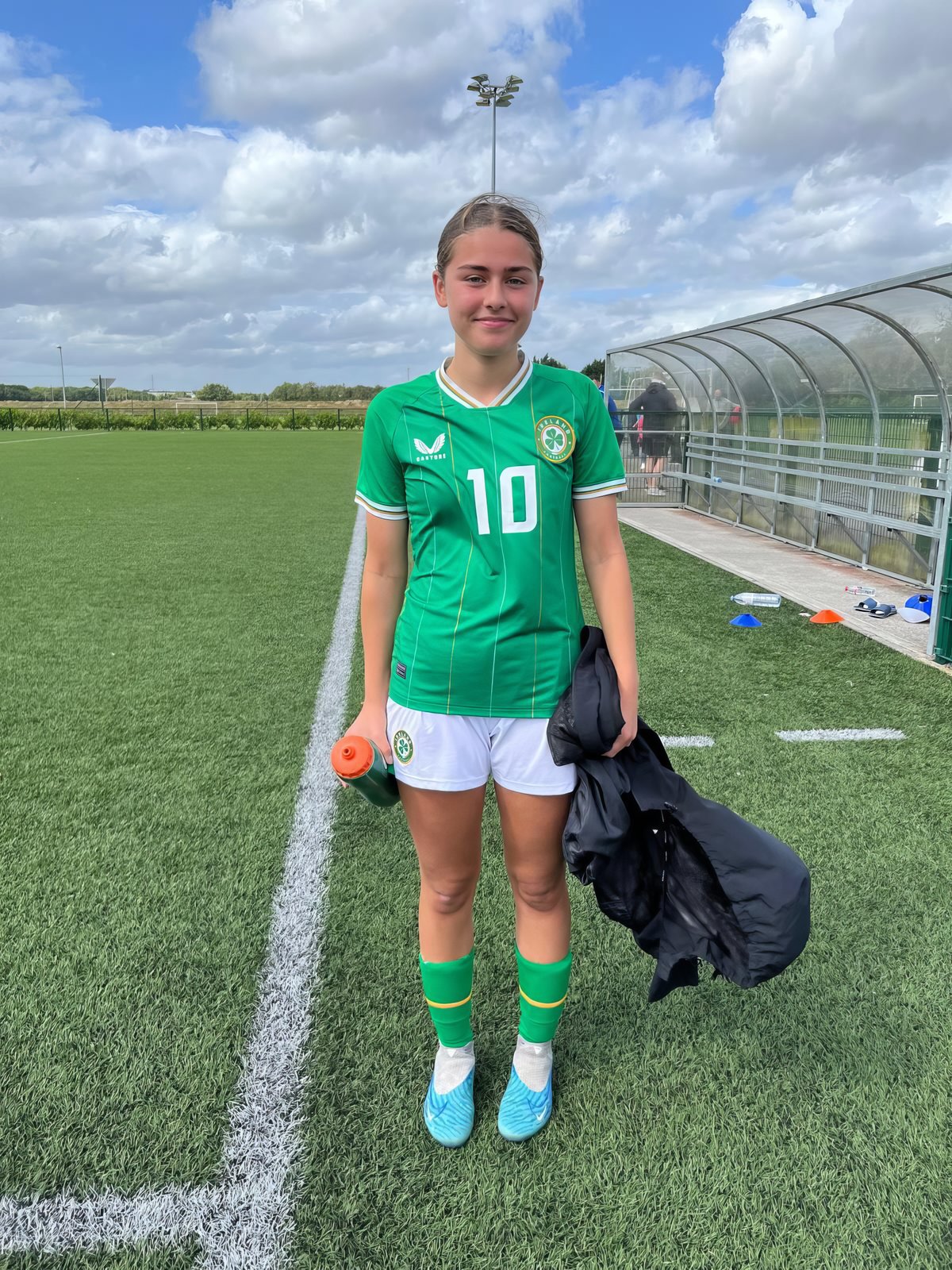
Ireland
Ruby goes to Ireland every summer. Her mom's whole family is there. For most of her childhood she had never thought to bring soccer with her on those trips. It was a holiday. It was grandparents and cousins.
The summer before grade eleven, Ruby's mom saw the opening before Ruby did.
There was a girl who had spent a year at Ruby's school and then gone back to the Whitecaps academy, who had posted a story of herself at a Republic of Ireland national-team camp. Ruby DM'd her. She got the U17 coach's email. She sent her highlights. They got on a Zoom call. He confirmed she was eligible on her Irish passport, told her the trial dates, and sent them over.
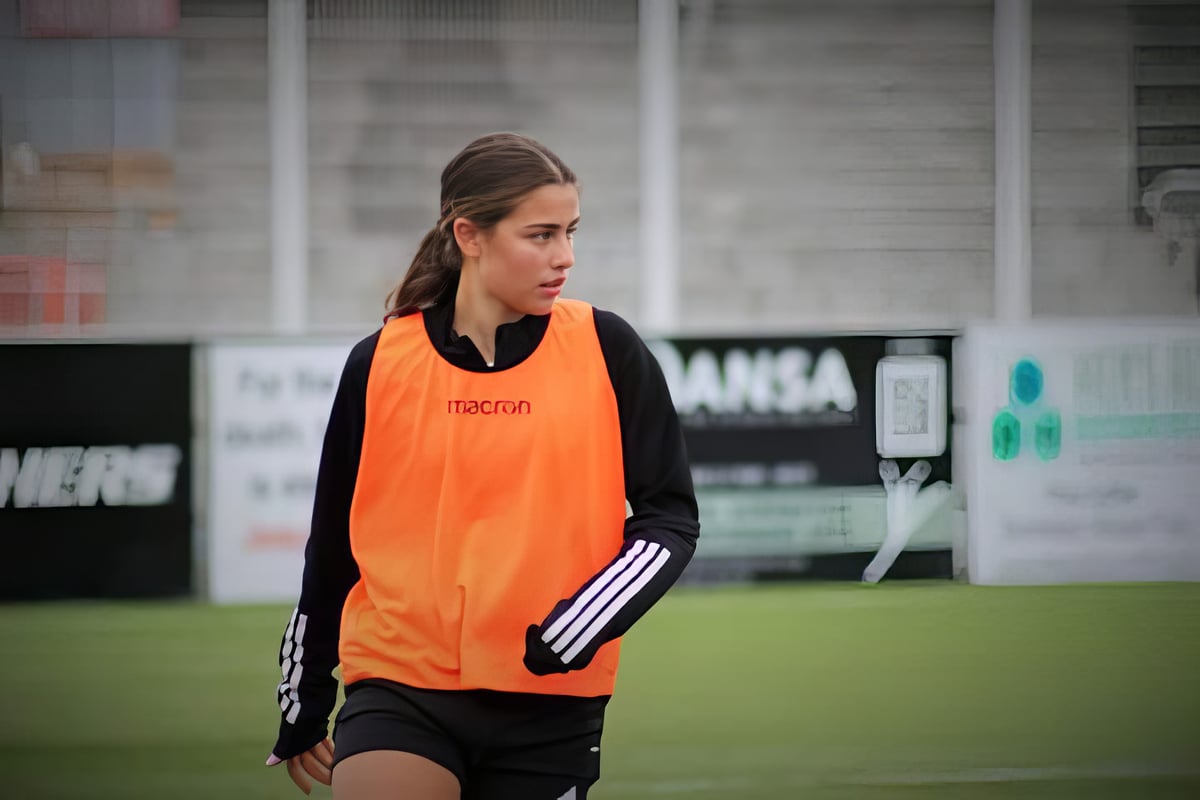
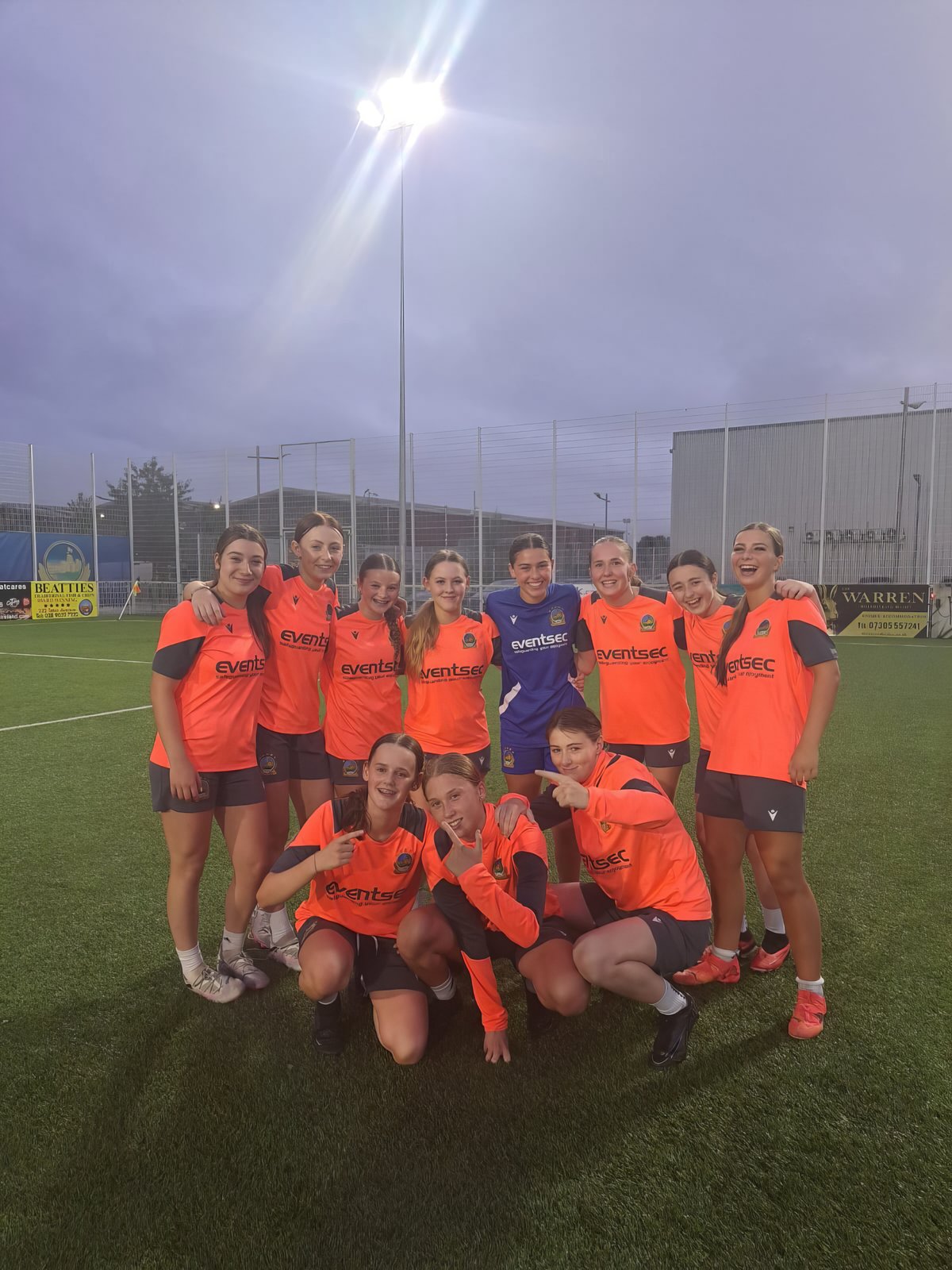
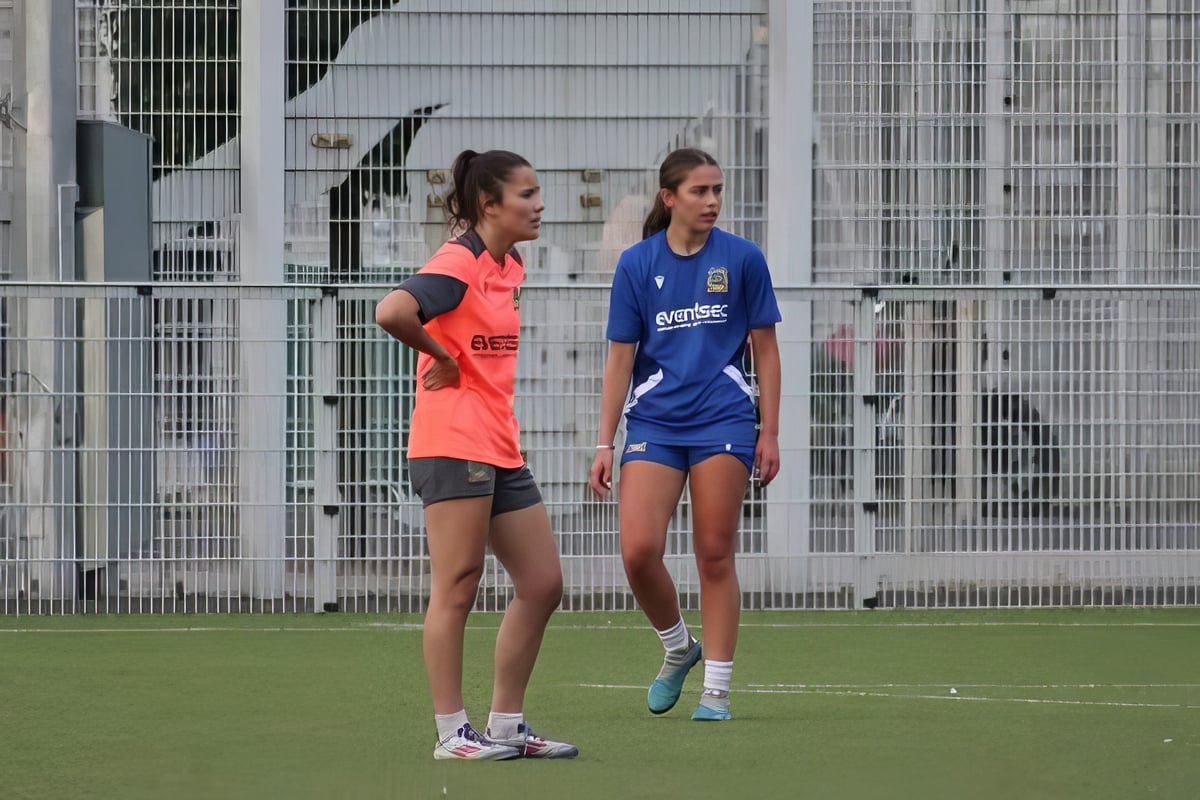
The trial dates fell across her family trip. She extended the trip. In the gap between the two trial dates, she trained with Linfield's U19 women in Belfast, in Northern Ireland, a few sessions a week. It was not a holding pattern between trial dates. It was its own opportunity. The connection there was Jane McMaster, a family friend who plays for Linfield's senior women's team, also a fullback, very good in her own right. Ruby had picked up a lot just from watching Jane play, right before Ruby herself moved to fullback at Fusion. Jane drove her to and from every session. Jane's mom stood on the sideline taking photos. The coaches were great. The players folded her in. Belfast was its own good stretch of football.
The trial itself was a different country in every sense. Three thirty-minute games on a perfectly kept pitch. Full kit. Real warm-ups. Halftime fueling. Multiple coaches on the touchline. Players walking around in Arsenal and Manchester City kits because that was where they were going next. Ruby, playing in midfield because she was still a midfielder then, looked around and thought, what am I doing here.
Ruby held her own. The players she was on the pitch with were very, very good. She was playing midfield, which was not her strongest position by then, in a system more technical than what she had been raised on, against girls who had already been in the program multiple times. Seeing what that level required up close was its own kind of useful. Trials at that level are not won in a single weekend, and the girls who made the final roster were the ones the coaching staff had been watching for years.
The bigger value of the trip was the picture she came home with. A clearer view of what the very top of her age group was working on, and a sharper sense of what to add to her own game next. She had her next target.
The Other Half
There is a part of Ruby that does not show up on the highlight reel.
She has kept straight A's through every year of high school. She has missed countless parties to study. She has missed birthdays and weekend events because she had a game, or had practice, or had a paper. She just did it.
It is the same thread as the dawn runs and the pre-school strength sessions. Nobody told her to. Nobody asked her to post about it. The whole house has run on the assumption that real work happens before the rest of the world notices.
That instinct is going to be tested at the next level. Health Sciences is a heavy major at any university. At a D1 program, where training is twenty hours a week and the season runs across the fall semester, it is heavier. Most D1 coaches steer their athletes toward lighter course loads to protect training time. Ruby is doing the opposite on purpose. The version of her life that exists only on a soccer field has never been the one she signed up for.
Holding Out
The recruiting process for a Canadian player chasing American Division 1 is a different sport from recruiting in the US.
Coaches do not show up at your weekend game. You bring yourself to them. Ruby spent months editing her own highlight reels and emailing coaches one at a time. She partnered with FMS, an agency with direct lines to programs she would not have reached on her own. She went to Surf Cup in California twice, the biggest college recruiting tournament on the continent. The work was relentless and largely invisible. Most of it she did at her desk.
Real offers came in. Multiple D2 programs. Multiple D3 programs. Strong Canadian schools, including programs where she had watched players she knew land. She could have committed early. She did not.
What she had learned, going through the process, was that there were very good options at every level. Strong programs. Real soccer. Good people. None of them felt quite right. She trusted that the better fit, the one she would actually love, was still out there, and she was willing to keep looking until she found it.
Part of how she sharpened that instinct was a conversation she crossed paths with one day, a player who had transferred from Memphis to Waterloo. The player told her that Memphis had been six days a week and almost too intense. Ruby remembers hearing that and thinking, that is exactly what I want. The intensity was not something to survive at D1. It was the reason to go.
Wagner came later than some of the offers. Wagner is a D1 program on Staten Island, a fifteen-minute ferry from Manhattan, that just made the NCAA tournament for the first time in its history. There are roughly seven incoming recruits in Ruby's class and three or four Canadians already on the roster. It is exactly the kind of program Ruby was holding out for, a team on the rise where her class gets to be part of the build.
She and her dad flew out for the visit in June. She fell for it.
The fit kept getting cleaner. The coach who recruited her left, but the new coach wants to play possession-based soccer with wingback-type fullbacks. That is, line for line, the player Ruby has spent the last two years becoming.
Her major is Health Sciences. She is thinking about physio. Training camp starts August 1.
2025-2026
There is a bridge year between BCSPL and university for a player at Ruby's stage, and Ruby has been doing it her way.
She played the whole MWSL fall season under Jason, on a team that played freely and tried to build out of possession. In the spring she shifted over to play for Alvin again, the same Alvin who coached her on the gold team a decade ago. She has started every single game this spring. By her own quiet measure, she is playing the best soccer of her life.
I'm just really excited to have a driven environment. Everyone's competitive, everyone's really good, and you really get pushed and challenged.
— Ruby Ambardar
The thing that has finally pulled together is everything she had been building separately for years. The strength. The position. The reading. The mental work. The recruiting result was the recruiting result. The soccer she is playing right now is the proof.
She is not surprised. The work was always there.
What She Would Tell Twelve-Year-Old Ruby
I ended my interview with Ruby the way I end every interview. I asked her what she would tell twelve-year-old Ruby. The one about to walk into the BCSPL intake.
Her answer was the most Ruby thing you can imagine.
Just know yourself that you are very good, and that you are there for a reason.
— Ruby Ambardar
That is the player. Not the loud announcement. Not the highlight-reel goal. Just the quiet, accurate, hard-earned, well-defended knowledge of her own ability. The kind of knowledge you can only build by getting up before sunrise to run when nobody is watching, by lifting before school when your friends are still asleep, by closing the laptop on a Friday night because there is a paper to finish, by choosing the harder major because the harder one is the one she wants.
She has spent every step of her life doing the work that does not show up in the recap. Wagner is just the room where the work finally gets to be the loudest thing about her.
She is still running.
